Home
Home

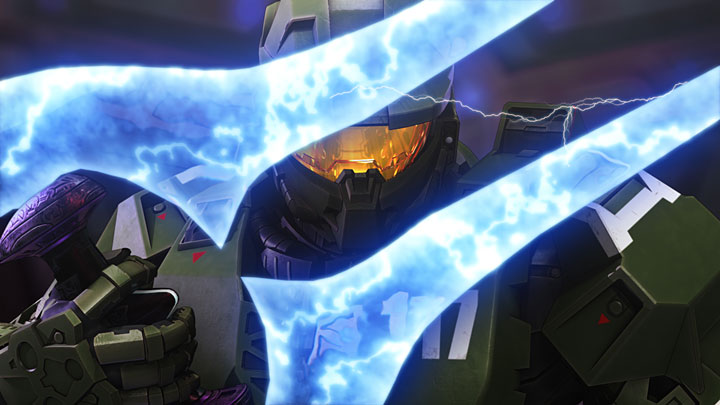
Frank O'Connor is one big know-it-all. The franchise development director for 343 Industries, the Microsoft group responsible for all things Halo, knows what's going to happen to Master Chief six years from now.
He also knows another thing that very few others do: The Japanese deserve respect when it comes to the first-person shooter and its fiction. They've schooled O'Connor at his own game (he used to work for developer Bungie), and they've proven they can be as Halo hardcore as they come.
Which is a good thing, because several Japanese movie makers have pooled together their efforts for the upcoming anime compilation Halo Legends, due out Feb. 16 on DVD/Blu-ray and for download. See what O'Connor has to say about working with the East on a franchise designed for the West, just how many times an Asian film director can beat Halo 3 on Legendary, Spartans fighting dinosaurs (yes, really), and more.
Bitmob: What do the Japanese know about Halo? It's never been a big franchise for them. Wouldn't they rather be playing Final Fantasy and Cho Aniki and games like that?
Frank O'Connor: One of the first Humpday Challenges we did at Bungie was against a Japanese team in Halo 2. They were just kids. There were two guys running around with dual-wielded plasma pistols and two other guys with just battle rifles. I'm like, "What are they doing??"
Then the two plasma-pistol guys start taking our shields out. Not just one shield at a time but everyone on our team...suddenly all our shields are out. Then the other two are just picking us off with headshots.
So they were playing SWAT [-style], and we were playing regular rules, and we just could not get it together. It was the worst beating we ever got, and it was from all Japanese players.
Bitmob: Worse than the ones we gave you back when we were on EGM?
FO: When we defeated EGM narrowly by one game, I believe --
Bitmob: Wait a minute -- no, no, no.... We won* --
FO: I think you guys had some temporal issue with how you calculated that.... [Laughs] Anyways! Ancient history....
But [the Japanese guys gave us] the worst beating we ever had, just in terms of sheer frustration and our inability to adapt. You know how when you're getting beat by someone much better than you, you can hide, or you can adapt, or you can do something just to make their life just a bit harder? We couldn't do it.
So the Japanese Halo community goes all the way from the really crazy hardcore fiction fans to the really skilled players. It's really interesting to see how they went about destroying us.
With the anime studios...[Director Shinji] Aramaki has completed Halo 3 on Legendary, like, four times I want to say. Which is more than I have. I complete it on Legendary and get all the Achievements...you do it just once, right? It's a big chore, and you just take care of it.
He's done it four times. When you watch his episode [The Package], he has all the [heads-up display] stuff almost perfectly correct. The HUDs even have slightly different inlays because he knows which helmet they're wearing.
We didn't even need to tell him that! I mean, we would have, because that's our job, right? The stuff just came back and needed the absolute least canonical tweaking. In terms of details, we hardly had to do anything with that guy, because he's a Halo nut. This is the guy who did Appleseed; he's worked on Ghost in the Shell....
Bitmob: Did anything surprise you as far as what aspects of Halo they particularly enjoyed? Could you see any cultural differences in what they liked in Halo versus what Western gamers appreciate in the franchise?
FO: There's stuff that's inherent to anime that we don't even think about, like hair. Like, there's going to be Spartans with spiky hair. There's going to be ODSTs with spiky hair. There's going to be hair. That's what you do with an anime.
I think it was 4°C on [the episodes] The Babysitter and Origins who was the first studio who came back with character designs, and they were really nervous because there was hair. And they knew that Spartans didn't have hair. We're like, "No, no, no...we understand we're making anime."
All of the surprises were pleasant surprises. Sometimes the director would come up with an idea that was better than our idea, so then we'd embrace it.
There's one studio that we ended up not working with, because we just couldn't -- we didn't want to go in and impose, "This is the Halo story bible! You can't deviate from it!" We had conversations with this studio, though, and it was just crazy talk. Fans would've been agitated [with their ideas].
We caveat the hell out of the Toei episode [Odd One Out] because it's off-canon. This other one was just not manageable. And the Toei episode has dinosaurs in it! [Laughs]
Bitmob: Can you tell us about some of those crazy ideas?
FO: No. [Laughs]
Bitmob: The Halo storyline is a bit hard to follow at times. How did the Legends storywriters deal with that? Did you have to explain a lot of things to them?
FO: We have a lot of reference material. We have the Halo story bible...we have a thing called the Halo movie guide, which was originally part of the "what if we make a movie?" process. We gave them all of that. We wanted this to be perfect, so we gave them the deepest insight they could have or wanted.
They all had either a Halo nerd on-site, or they created one. One of the directors at 4°C was just amazing to work with. I think he became a Halo fan from going through it and became more and more intrigued by the deep canon -- things like Spartan training and the Forerunner mythos.
Story was probably the easiest thing. I shouldn't say that, because that was most of my responsibility, right? But it was really easy to work with all of those guys on that.
Bitmob: What is one important question or aspect of the Halo fiction that Legends addresses?
FO: So Origins...these are the first two episodes -- they're sort of a potted history of Halo. It's split into two for a good reason. There are two sides to the Halo story. One is the Forerunner mythos, which is: How did the universe get to be the way it is? Where did this legacy, mystery, and enigma come from?
The second half is, what is "contemporary Halo"? I think of that as Eric Nylund's "Fall of Reach," the Halo games of course, and all of that military-Earth stuff.
So we explain the whole Halo universe in this. To your point, it's easier this way than in the games. You have to spend 8-10 hours playing it and then remember all the cutscenes. It's not the best way to ingest story. It's a fantastic way to ingest universe.
Our luxury is that the Halo universe is really strong. If you see a Warthog in the anime and you see a Warthog in the game, there's no problem understanding what you're looking at. Bungie has created this thing that in some ways -- to me obviously since I'm a Halo fan -- is as strong as Star Wars. We have a Warthog; they have an X-Wing...blah blah blah, right?
If you see something in Halo Legends, and you're a Halo nut, and you say, "Well, wait. That can't be, because..." -- bear with us. Because everything in this is deliberate. Every single story in there we have layered and threaded with things that are going to pay off, either in other Legends episodes -- there are some tiny little Easter Egg connections -- or in other Halo...stuff.
People have already spotted that the Halo story anthology that we just released in novel form called Halo: Evolutions has a planet where prototypes of armor are built. One of the stories in Legends is about what happens down on that planet. So that's a really simple connection to make.
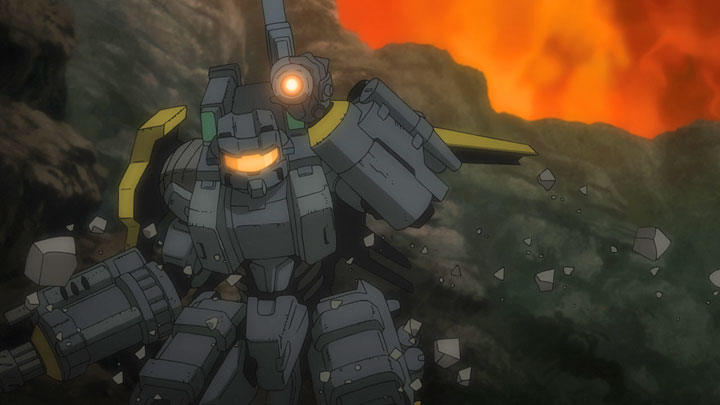
But anything mysterious or weird or enigmatic; there will be a payoff, and we have that planned out. I've written story synopses for things that are going to happen six years from now.
We don't want to end up in a situation where we don't know where our canon is going. We not only know exactly where it's headed but where it came from, too. We sort of stretched the story from the very, very dawn of time to the very distant future.
I'm not going to pretend that we got it all down to the granular, molecular level. But all the big threads are resolved. I know what happens to big characters in the universe years from now, and I know where the biggest mysteries in the universe came from.
Bitmob: Master Chief, the Flood, the Forerunners, and the Halo structures themselves aren't that prevalent in Legends. Is there a reason for this?
FO: Some of that stuff is in there. But these are not the games. We're not going to retell the story of the games. That's what Bungie does and can do way better than we can.
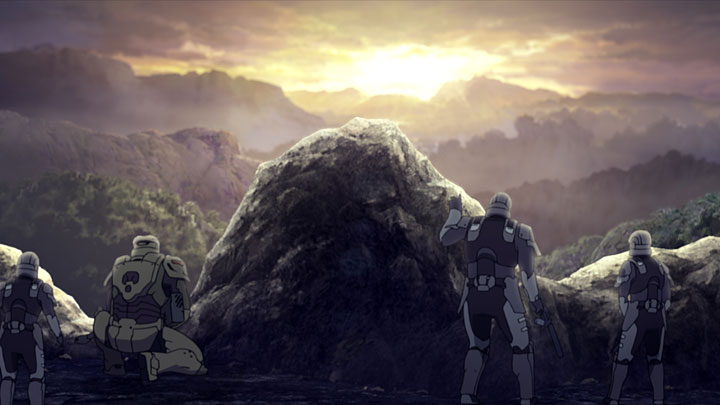
Bitmob: So why can't the ODST and Spartans put aside their differences and be friends?
FO: [Laughs] You know, why can't Marines and SEALs be friends, right? It's the same thing.
We think of the Marines as this elite force. And then you have Navy SEALs who are this other layer of elitism within the military. Then the SEALs are dwarfed by Delta Force and so on and so on....
We got a class system is what we've got. [Laughs]
Also: This.