Home
Home
At yesterday's press event for Medal of Honor, the one word used by everyone associated with the project was "respect." Producers, creative directors, PR people, and tech staff repeated the term to me so frequency, I started to wonder who drilled it into them. Respect, with extra emphasis. Respect for the soldiers, their stories, their service and their sacrifice.
So it's interesting how a lot of people accuse their game of being highly disrespectful to the very soldiers Medal of Honor wants to honor.
Not just another pretty face.
In all honesty, we should've seen this coming a mile off. Call of Duty has worn the crown as gaming's top shooter and biggest moneymaker by a wide margin for years now, but last March's surprise implosion of Infinity Ward -- the developer who turned CoD into a billion-dollar property -- opened a very big door. Certainly, Electronic Arts makes no bones about who it's really gunning for with Medal of Honor. The "Step Up to Tier One" ad campaign might as well read "Step Up from Call of Duty."
But to truly be -- or possibly beat -- Call of Duty: Modern Warfare 2, you can't just rely on high-intensity gunfights against overwhelming odds. No, you need some extra juice. You need controversy.
Voila. In Medal of Honor's team multiplayer matches, one team plays as Taliban fighters.
Surprise, surprise, a few people are upset about this. UK Defense Secretary Liam Fox has called for a nationwide boycott. The U.S. Army and Air Force have banned sales on all their military bases, foreign and domestic. When journalists at Gamrfeed.com took the question to a few active-duty soldiers, some called it war profiteering, some shrugged it off, and some were deeply disturbed. They want to play the game. They don't want to play as an enemy who is out there right now, killing their brothers.
Electronic Arts Senior PR Manager Amanda Taggart responded to this fairly sensitive issue in mid-August, largely by denying any issue existed. "If someone's the cop, someone's gotta be the robber," said Taggart. "In Medal of Honor multiplayer, someone's gotta be the Taliban."
Well, no. They don't.
Gamers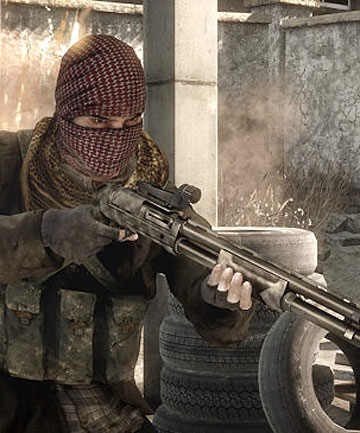 have played generic terrorist roles for years, in Counter-Strike, in SOCOM, and yes, in Call of Duty, among others. The operative word here is generic. Terrorist X doesn't have a face or a cause. He hasn't attacked our country, or cut a teenage girl's ears and nose off in the dead of night. EA fell back on broad, harmless generalizations many times in the past: robber, terrorist, alien. This time, they deliberately chose to get very specific indeed, in a way that can only serve to emotionally charge the situation.
While I relished the idea of diving into Medal of Honor, I damn sure didn't relish the idea of stepping up to be a Tier One terrorist. On the other hand, a big part of me enjoyed the honesty. "Taliban" or "terrorist," you're still killing American soldiers. We play the role of "Nazi X" in multiplayer without a twitch now, but if that game released in 1947, when many European cities were still cleaning rubble off their streets? Different story. More than the specificity, it is our proximity to these events that proves most disturbing.
Only good luck finding any actual reference to the Taliban in the multiplayer itself.
They get name-checked early and often in the campaign -- Army Rangers pumping themselves up before a ground deployment joke about "all-you-can-eat Taliban" -- but proved mysteriously absent in the all modes/all maps multiplayer build presented to us last night. Also missing: Americans. Teams are split between "Coalition" and "Insurgent" forces. Insurgent classes (Rifleman, Specialist, Sniper) offer descriptions such as Chechen Veteran, Uzbek Veteran, and the even more descriptive 005 Special Operative.
The match wrap-up screens continue the theme of deliberate vagueness, informing you that "Your Team Won" or "Your Team Lost," superimposed over the victors securing the area.
I asked four people, including Executive Producer Greg Goodrich, where they'd hidden all the Taliban references. Supposedly, some mention of the Taliban exists on some menu screens somewhere, but I couldn't find them.
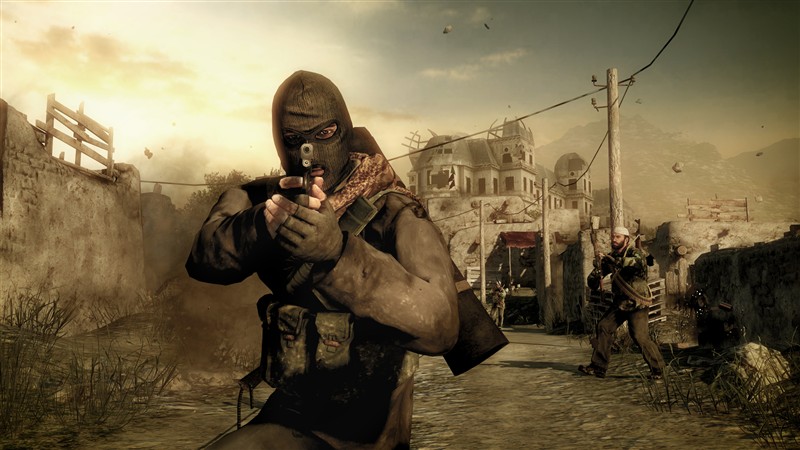
Balaclava = not the good guys.
Maybe that's why the backlash seems to mystify Goodrich. If there's one person on the team who doesn't treat "respect" as a buzzword, it's Goodrich, though mere respect doesn't seem accurate enough. "Reverence" is closer to the mark. He easily repeats the "This is not a game about the Taliban, this is not a game about Afghanistan, this is a game about the soldier" answer he's already given in several interviews, but in less guarded moments, it becomes clear just how much he genuinely wants to do right by the men in the field.
A controversy, particularly one accusing Medal of Honor of providing aid and comfort to the enemy, simply doesn't fit into his reality. "It just didn't feel like they were talking about our game," Goodrich told me. "There was a level of understanding about our product that wasn't there, what our tone is, what our intent is."
"We talked about this. Why wait sixty years to honor these guys? We wanted to tell their story." And the Taliban are an undeniable part of their story.
As far as the single-player campaign goes, Goodrich's reasoning holds. But story and honor don't get any space in multiplayer, a competitive arena boiled down to a pure Us vs. Them formula. In this case, America vs. Taliban, and guess what? America doesn't always win.
Multiple stakeholders at multiple levels vetted and approved these decisions, knowing full well the controversy they invited. It's fair to question their motives, whether it faithfully transfers the campaign's bad guys to multiplayer, or only serves as a cheap publicity stunt. It's also fair to ask whether casting players as Taliban fighters (as opposed to the generic alternatives) somehow improves the game enough to justify the very real, very painful feelings it might dredge up in someone who's lost a friend or loved one to these fanatics. It's fair to ask if they think this game sounds like fun, or if it disrespects those memories.
Word around the campfire is I killed you.
But it's not fair to claim this threatens the lives of our soldiers abroad, or to judge it based on hearsay. The demos I played didn't feel any different from any other blank-terrorist team in any other military shooter. In fact, great pains were taken to ensure the game doesn't push "Taliban" in anyone's face, to the point where I wonder why it's there at all. Were it not so inflammatory, I'd put it down as a mere anomaly, because otherwise, Medal of Honor fairly courses with respect and admiration for the operators, the gunfighters, the heroes it portrays.
Finish the campaign and you'll see the proof. According to Goodrich, after the curtain goes down, a message comes up. It's a dedication and a memorial to the fallen, a very personal note written not by anyone at EA, but by soldiers to their brother soldiers, both living and dead.
You'll have to decide for yourself if that's respectful enough.
One week after this article posted, Electronic Arts and Greg Goodrich released a statement saying all references to "Taliban" in Medal of Honor would be changed to "Opposing Force."