Running the PR obstacle course

Me
Friday, January 28, 2011
EDITOR'S NOTEfrom James DeRosa

I've dealt with the PR obstacle course on two occasions now. Put simply, it is easily the least enjoyable part of the job.

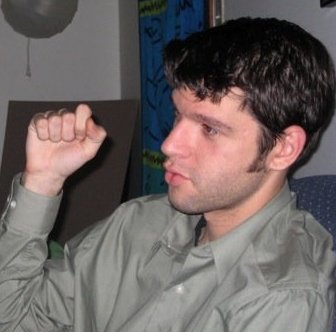
An interview in Rotterdam, Nov 2004

I'm extremely comfortable with one area of video-game journalism: the interview. The challenging part isn’t conducting them; it's setting them up in the first place.

My experience is that if you’ve met the subject at an expo or conference and have their business card, you can get through to them. But recently, I contacted a subject to ask if they’d be willing to comment on a feature I’m writing, and while they answered immediately in the affirmative, they had to get a sign-off from PR before we could proceed.

I’ve written on Bitmob before about how PR shields developers from the press, but the degree to which it closes access to video-game journalists is remarkable. It’s nothing insurmountable, and I have to guess that the bigger and more established the outlet you’re writing for, the easier it is to land that killer interview. A professional journalist once told me “No one cares about who you are. They care about the outlet you’re writing for.” Yet I’ve heard of wildly popular and well-regarded websites whose writers still have trouble getting through the PR net.


The existence of that net makes sense, and I understand the necessity -- to a point. The prevalence of sensationalist games journalism makes developers and publishers hesitant, and they like to make sure that who they’re speaking with is legit. But when speaking to a journalist actually interests the subject, requiring a sign-off from PR seems excessive.

You can’t tell me that Cliff Bleszinski doesn’t help sell games with all the publicity his boisterous personality commands, or that Ken Levine's willingness to regularly engage with the press doesn't inspire curiosity about his products.

Furthermore, practice makes perfect. It’s no wonder a dearth of interesting game-development personalities exists. If PR handlers don't allow developers a chance to speak out more often, is it any surprise that they don't feel comfortable doing so? Bleszinski and Levine have had enough chances to address the press that they’ve become quite good at it and are entertaining public speakers. That isn’t to say I expect all developers to have that ability, but surely some central figures in development at every major studio have the personality and desire to engage with an audience through the press. I wonder how often they simply don’t get that chance because PR closes the gate on them.

When we see criticism of the video-game media for not involving developers, remind yourself that a journalist might fail to do so through no fault of their own.

My feeling on how to address the situation is to consider whether we’re being fair to developers when we do get access to them. “Gotcha!” games journalism is something I’ve heard more about than I've seen, but developers must have reasons to see us as the enemy. Getting scoops is exhilarating, and entertaining your audience is an absolute requisite for this job. Take a look at Michael Thomson’s recent interview with Homefront’s Lead Level Designer Rex Dickson. It's not a softball interview, but it’s respectful and damned interesting.

Thomsen’s interview is precisely the kind of interview we need to see more of. If that’s what future games journalists here on Bitmob produce when they get their shot, it will go a long way toward allaying the fears of PR. It will also give developers the spotlight I think they deserve -- if they’re willing to step into it.

Interview picture by Herbert Blankesteijn, licensed under Creative Commons.


Dennis Scimeca is a freelance writer from Boston, MA. He has written for The Escapist, Gamasutra, and @GAMER magazine, and he maintains a blog at punchingsnakes.com. Follow him on Twitter: @DennisScimeca. First Person is his weekly column on Bitmob concerned with questions around the video-game industry and the journalism that covers it.

 
Problem? Report this post
BITMOB'S SPONSOR
Adsense-placeholder
Comments (7)
Barj_sketch
January 26, 2011

It's sad that Thomson's interview had to be explicitly titled "Hard Questions for Homefront". I almost never read video game interviews because I find the questions and answers in most to be so regurgitated and uninsteresting that I just gloss over until I reach gameplay details.

This, contrasted with interviews in newspapers, on talk shows, on the Daily Show, in Reader's Digest, and even in various stupid teenage tabloids, makes me feel annoyed. All these other media ask interesting and off-the-wall questions that keep the interview fresh and exciting. From Leno's "What the hell were you thinking?" to a random Canadian child magazine's "Yay or nay? Twilight." there are questions that seek to get something new, something exciting, something controversial from their subjects.

With game interviews, it's by the numbers. What's the gameplay like? How's the engine? Graphics? This level looks cool, explain it? While I can understand the PR netting to protect against barbed or trapping interviews, there should definitely be a demand for more pointed questions. I would love to see someone ask Todd Howard "Bethesda are widely known for extremely buggy games. Are you guys implementing a new testing method for Skyrim?" I want to see someone ask Levine "Bioshock's ending was unsatisfying. Will you be going for a more poignant and unique ending?" I want to see someone ask Mark Rein "How can you claim any love for the PC platform when your company avoids releasing demos for the platform, something which many rely on to test a game on their system prior to purchase?"

Someone needs to start asking the pointed questions, assuring the audience that their concerns and reservations are being addressed. The journalist, at this point, is the connection between the gamer and the developer. There's already enough information going from developer to gamer. The journalist should send some the other way.

Me04
January 27, 2011

@Jeroen: I agree, and I think there's a will from readers and journalists for the kind of "pointed questions" you want. The problem is if the games industry itself wants it.

If I asked such a question to Todd Howard, even though it's the kind of question my readers deserve, am I guaranteed a satisfactory answer? And what will the consequences of me asking that quesiton be?

Considering what games PR asks in exchange for exclusive anything (interviews, previews and so on) -- essentially free promotion of their upcoming title -- can interviewers in such a position justify tough questions? They have their exclusive, will get lots of clicks or magazine sales, and if they upset the PR people they're set to lose the next big exclusive from that company. Journalists need to have a working relationship with these PR people, after all.

I think it's a problem with both the industry and the games press. The industry witholds key people, as Dennis points out, but at the same time the cynical side of me feels that not every game journalist wants to leave this comfortable agreement with PR. There are plenty of good ones champing at the bit to ask more probing questions, but there's always someone else happy to ask softballs to secure the exclusive. The Homefront interview is more the exception than the norm, sadly.

As for Dennis' article, I think PR withold key people for a number of reasons:
- When someone's speaking on the record, they have to be very careful about what they say. They could spill the beans on a feature early, one which PR/marketing would've liked to have held back for a few months as part of their marketing plan. To authorise someone to speak to the press requires them to be briefed on what they can and can't say.
- Opinions are always shady things. If a person from Capcom were being interviewed and they were asked to express their personal opinion (and not Capcom's), it only takes one sensationalist reporter to interpret that quote in a certain way, and suddenly there's a media shitstorm: "CAPCOM THINKS THIS, THIS AND THIS". Having a personal opinion misinterpreted as the company line is, I imagine, a nightmare for some PR people.
- And, as I stated above, PR quite frankly like to have control over the people who can and can't be interviewed, and who can and can't interview them. It ensures favourable coverage.

Barj_sketch
January 28, 2011

@Chris: I realize; I should have been more clear. I think there needs to be more demand from the audience, not just the journalists, for more pointed questions. I'm fairly sure it would be beneficial to both sides as it could spur the developers to do better if they know their audience are not happy about something while the audience can be reassured that the developers know about it. I'm sure if we got this, certain "features" like rubberband AI would have been wiped out ages ago.

It is certainly a double edged sword and should be used in moderation. No arguments there. It's only its lack of presence that bothers me.

Default_picture
January 28, 2011

I have had generally positive relationships with PR people. It was funny to have an interview with David Gaider monitored by a PR rep though. I think she was there so I didn't get too much info about DA 2 out of Gaider :)

You're right about the points you make.

100media_imag0065
January 28, 2011

I think the PR people and the industry they are a part of have manipulated the whole experience to work in their favor. They have convinced everyone that they are needed, when they really aren't. Just like the big music labels. All they have done is put everyone on edge. For the development side, they have wispered in the ears of everyone who has hired them about the evils of journalists. They tell them "The journalists will try and trick you, you always have to be on alert, that is why we will be there to help you".

Now I am pretty positive that anyone working in the video game industry is pretty damn lucky to be there, and they know it. I highly, highly doubt that sacrificing their journalistic integrity to get Ken Levine to accidentally release some small, previously unreleased information about an upcoming game is going to be on the top of that journalists list of things to do. I am sure it has happened before, but I am also sure it is far from a problem.

The PR people want developers terrified you journalists. After all, these developers have poured their hearts into their work, and have spent hundreds of man hours maping out when and how every single little detail about the game will make it to the press. The PR person is there to pretend to be a barrier between them, and the press. Now, on the other hand, they have convinced the press that they need PR too.

After they manipulate the situations with the developers, anyone in the journalism industry who wants an interview has to go through them. They have essentially wedged themselves inbetween the two most important entities in this industry. If you don't play nice, you don't get squat. If you aren't Gameinformer, you might not get anything at all.

They are hurting the industry, not helping it.

January 29, 2011

I love how this guy writes. One day I'll get there.

Shoe_headshot_-_square
February 01, 2011

This: "It’s no wonder a dearth of interesting game-development personalities exists. If PR handlers don't allow developers a chance to speak out more often, is it any surprise that they don't feel comfortable doing so?"

That's exactly right. Well said.

You must log in to post a comment. Please register if you do not have an account yet.