Role-playing games needed to evolve the "grinding" mechanic

Default_picture
EDITOR'S NOTEfrom Rob Savillo

Grinding ain't what it's cracked up to be, and William explain why he's happy to see it on the outs regarding role-playing games.
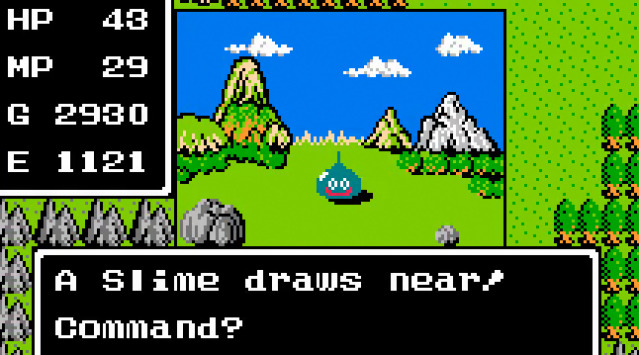
I fear I am getting too old to be getting into arguments in video game stores. When I was 8 years old, a clerk and I engaged in a comical debate about who was better: Link or Gordon Freeman. I hadn't played Half-Life yet, and really, I was probably too young to even enjoy the masterpiece that it is. I also assumed that Gordon was related to Cathy Freeman, a famous Australian athlete and, consequently, could not see the appeal. The whole encounter was actually quite endearing. 

Fast forward 13 years. Location: EB Games, Stone Road Mall. Situation: A gentleman, ironically wearing a faded Call of Duty T-shirt, is complaining about the "lame difficulty" of new-school games and the need for a return to more "classical" role-playing games. Response: complete over-reaction.

Read more >>

Why mission and story progression are at odds in Borderlands 2

Default_picture
EDITOR'S NOTEfrom Eduardo Moutinho

The more choice a player receives in an open-world game, the more loose ends emerge. It's a daunting challenge for any developer and one that makes me admire their accomplishments even more.

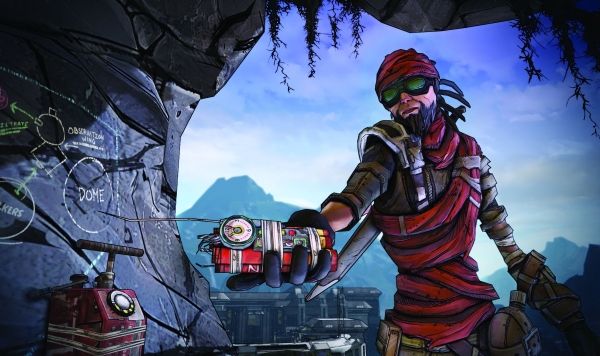
Borderlands 2

Borderlands 2 is a game I have a hard time judging, even now, two months after it came out. While I enjoyed the game, some clear issues constantly nagged at me. I really enjoyed the writing of Borderlands 2, for example, but I don't know if I can say the same about the game's actual narrative.

The individual elements of that storyline: the characters, dialogue, mission text, echo recorders, and even the title's overall concept are all generally really funny and/or interesting. Yet, the way you experience them as you play the game leaves a lot to be desired.

Borderlands 2's NPCs urge you to take on the main story quest, but you also have a giant list of side missions to accomplish that often take you far from where you're "supposed" to be going. Basically, the progression of the missions don't really support the progression of the story or vice versa.
 
These issues bring to light a question about the Borderlands games in general, which I think developer Gearbox Software really needs to answer going forward. Is Borderlands a linear or nonlinear experience? For me, the main story is written and executed for a linear endeavor, but all of the side missions are designed more for a nonlinear adventure.
Read more >>

Spotlight: Dark Souls is the new Simon's Quest, diversity in video games, and more

230340423

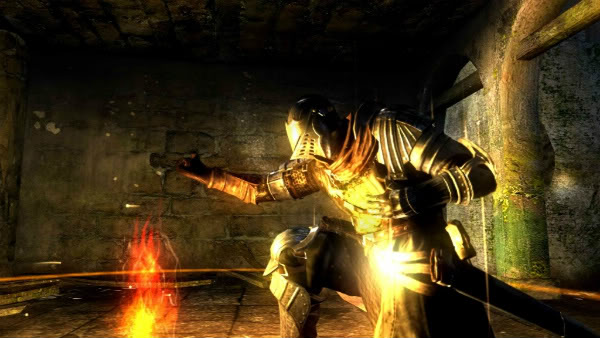
Dark SoulsThe Community Spotlight features some of the best unedited articles that didn't quite make the front page. This week, we compare super-difficult RPG Dark Souls to an old-school classic, search for diversity in player protagonists, and more.


Dark Souls is the new Simon's Quest
By Bryant "B" Chambers

I've had a spotty relationship with Dark Souls myself, but every week I seem to read another article praising it. Here, B says that Dark Souls is what the Castlevania series should have evolved into. He lists a surprising number of correlations between the two. Insightful stuff.

Diversity in video games: Where did everyone go?
By Brielle Wesley

Brielle analyzes the characters and content of Max Payne 3, examining the racial makeup of the game's cast. She also looks at how many of those characters end up dead (and their respective races). Her findings are perhaps not surprising, especially for a Max Payne game, but they're interesting nonetheless.

A boy's world: Video games need more strong female protagonists
By Javy Gwaltney

In a similar vein, Javy is disappointed at the recent reveal that Grand Theft Auto V will feature three playable characters...and none of them are female. He says heroines like Jade from Beyond Good and Evil are far too rare. "We need those kinds of protagonists. ASAP. Not just for the sake of diversity but for storytelling," he writes.

Read more >>

Why annual sequels might be killing your favorite franchises

Default_picture
EDITOR'S NOTEfrom Sam Barsanti

I'm sure a strategy like this makes a ton of money (how many copies has Black Ops II sold already?), but it's still surprising to see so many publishers pushing for another sequel every year after what happened to Guitar Hero, and Tony Hawk, and ... well, every other franchise that has tried this.

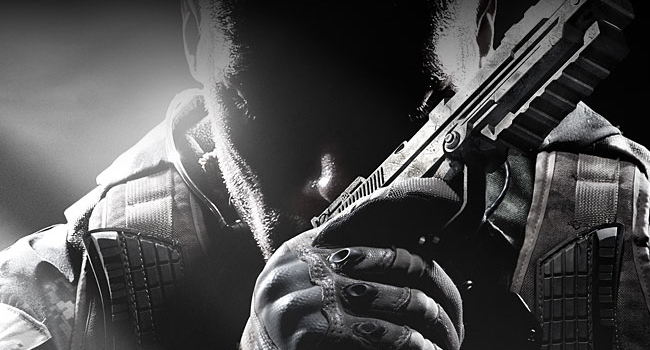
Call of Duty: Black Ops 2

In the video game industry, many of the leading developers will shoot for an annual sequel and put out a new game at the same time every year.

Franchises working on this schedule are often the dominant ones, topping the sales charts year after year. However, this order of operations often has an expiration date, and eventually the games that follow it will hit a dead end.

Why is that? Well, it’s the same reason that they were once so successful: their annual release date.

So what’s the problem here, exactly? The primary and most prominent issue with franchises putting out a new title every year has much to do with their development cycle. Having to work to a certain deadline leaves very little room for advancements and innovation, often rendering sequels barely distinguishable from one another.

On one hand, a series of games should have a sturdy system to hold it together between installments. But on the other hand, if that system is too cut and dry, it may simply leave its players bored overall and send them searching elsewhere for new and improved ideas.

We are always hoping for improvements to our favorite series. Not just new levels, characters, and weapons (which are all fine and dandy, of course), but new concepts to bring these elements into a different light.

Unfortunately, this is not always what we end up with. In fact, you may be more than familiar with a few franchises that suffer from this unfortunate fate.

Read more >>

What makes a solder's loss acceptable in XCOM: Enemy Unknown?

Default_picture
EDITOR'S NOTEfrom Rob Savillo

I'm a purist, I suppose, in that I always play XCOM in Ironman (which forces your game into a single save file, thus negating any ability to reload) -- even with the original strategy entries in the series that don't have such an explicitly togglable mode.

But Steven provides some interesting thoughts on why you could justify such save-scumming, and it's not what most developers seem to think is the reason for doing so.

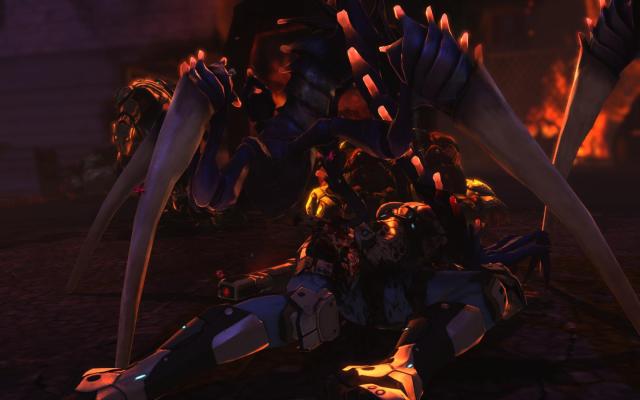
XCOM

I, along with many of you (I imagine), have sunk endless hours into XCOM: Enemy Unknown since its release, desperately trying save the world from an ever intensifying alien invasion. And, as much as I try and stay true to the desperate nature of that struggle, I have a confession to make: I've been save-scumming.

Several times after a mission where I incurred losses that I simply could not stand, I've gone back to a previous save to try again. Every time I load my game to continue the fight, I am shamed by the saves I've left behind -- total squad wipes, deaths of beloved (and well-trained) soldiers, and countries broken out in panic -- all reloaded so that I might continue in the quest for a more successful game.

But I haven't cheated every death. I've experienced losses that I was willing to accept. At least as many times as I've reloaded to spare soldier or save a nation, I've saved over an old file making a death permanent. The interesting question is why. What are the parameters of acceptable loss?

Read more >>

Bitmob Wants You: The Assassin's Creed III collection

230340423

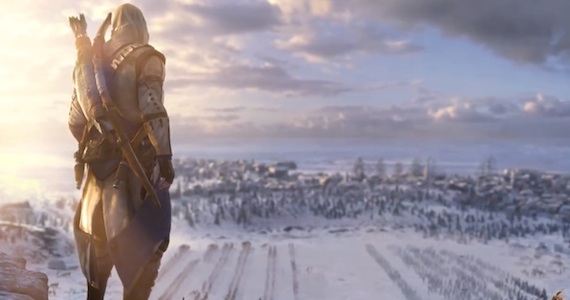
Assassin's Creed 3

Welcome to another Bitmob Wants You collection! We're a little late in publishing these, but a couple of them have already hit the front page, anyway. Check them out, along with a few others, below.


How Assassin's Creed III made talking to people fun
By Samuel Durling

Conversations in modern games can be a frustrating experience (or the whole experience, in some cases). But they're probably not the first thing you think of in Assassin's Creed. Samuel, however, says his chats with the settlers at his Homestead were the most rewarding part of the game.

Assassin's Creed III isn't shy about its tutorial
By Daniel Castro

Developers these days face the challenge of teaching their game's controls while keeping things entertaining. Daniel examines whether or not AC3's lengthy tutorial achieved this balance. (Hey, at least it's not as long as Final Fantasy XIII's.)

Assassin's Creed 3: Not quite as graceful
By Reggie Carolipio

Reggie's review of AC3 focuses on the integration of its story and gameplay. His verdict? Mixed: "AC3 can occasionally glide through the trees like an Assassin. I only wish it didn't have as much trouble on the landings." He points to a host of glitches and other inconsistencies that hold the game back from greatness.

Assassin's Creed III gives players a new connection to history
By Mark Purcell

Previous games in the AC series have focused on historical periods that may be unfamiliar to American gamers. But AC3's Revolutionary War setting touches a lot of chords for Yanks. Mark lauds the game for this achievement: "By no means am I saying that this piece of digital fiction should be taken seriously from a historical point of view, but ACIII puts players in a position to experience something authentic."

Read more >>

Games need to stop with the chosen-one heroes

Default_picture
EDITOR'S NOTEfrom Eduardo Moutinho

For me, being the "chosen one" doesn't matter as much as being vulnerable. Plenty of recent releases have given us extremely powerful yet extremely flawed heroes to battle with. The key is nailing the delicate balance between generic and genuine.

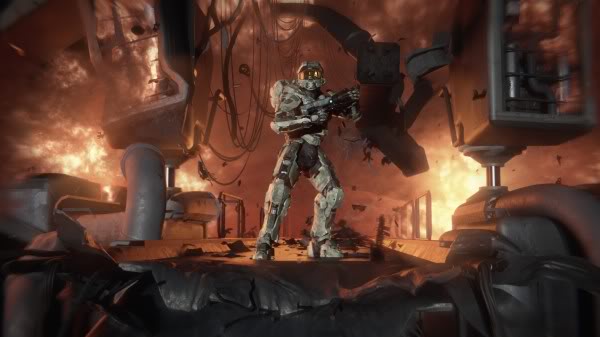
Halo 4

This article contains spoilers for Diablo III, Halo 4, and The Walking Dead: Episode 4 -- Around Every Corner.


This year, we’ve seen a surprising increase in the number of “chosen one” storylines in games. Kingdoms of Amalur: Reckoning, Diablo III, and The Secret World (among others) all have you playing as characters who are somehow more important than everyone else in their respective worlds.

To tell you the truth, I’m kinda getting tired of it.

How cliché is the chosen-one concept by now? It’s been used in countless forms of media, especially since The Matrix became such a popular film. It just feels lazy to keep using it at this point. An idea as pervasive as this has trouble making an impact since it is so common. I often roll my eyes whenever the concept pops up in a narrative.

Read more >>

Waking Mars mirrors a multiethnic, 21st-century America

Photo-3

Waking Mars

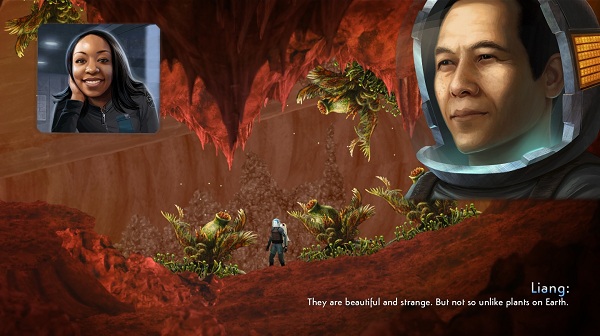
I love the way that Waking Mars approaches the ethnicity of its characters. The astronaut heroes just happen to be an Asian guy and a black woman. These details never really come up in the story, yet they are quite obvious during the dialogue scenes in this Martian-botany, cave-exploration game. I was pleasantly surprised to see that for this dynamic duo, race is an afterthought. 
 
This uncontroversial yet uncommon approach to representation in interactive media speaks to the future (humanity is exploring another planet, after all). In essence, it echoes the same sentiment many have about the shifting demographics of the United States, where a diverse coalition of Americans recently reelected President Barack Obama.
Read more >>

An orchestra of mini Marios play a beautiful RPG medley

Mikeminotti-biopic

Mini Mario Orchestra

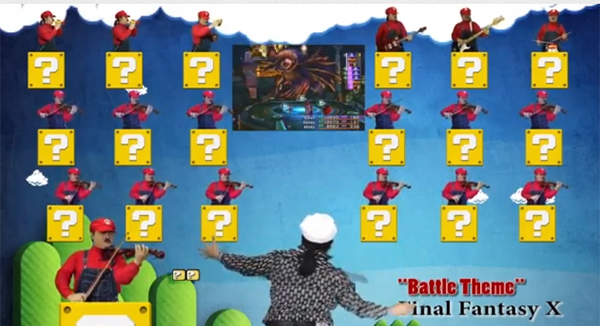
Why are all of the performers in this video dressed like little Marios? I don't really know, but who cares when they're playing a medley this awesome?

This song, arranged and performed by composer Diwa de Leon, features some of the best music from role-playing games, including (in order or appearance in the medley) Final Fantasy, Chrono Trigger, The Elder Scrolls V: Skyrim, Xenogears, Super Mario RPG: Legend of the Seven Stars, Final Fantasy IX, Final Fantasy VI, Chrono Cross, Final Fantasy X, Final Fantasy VII, Legend of Mana, Mass Effect, Dragon Quest, and Grandia.

You can hear it for yourself after the break.

Read more >>

These super-detailed Battletoads sculptures almost make you forget that damn bike level

26583_1404714564368_1427496717_31101969_389938_n

Battletoads

One of the most uncanny moments of my young life was wandering through a dollar store and stumbling upon a rack of action figures with the most boring packaging imaginable. Each toy sat in its bubble pack on a red card that was completely blank except for the word "SPACE" written in bizarre cartoon letters.

It was pretty much the kind of thing one would expect to see in a dollar store, except that I immediately recognized the figures themselves as Zitz, Rash, and Pimple, the stars of the infamously difficult 8-bit classic Battletoads.

I never understood how those figures got there, or what was up with that packaging. My point, though, is that these Battletoads sculptures, courtesy of artist and toy designer Sam De Jesus, are cooler than those other ones in every possible way.

De Jesus crafted the Toads out of Super Sculpey modeling clay for a commission. You can see more of the making of these statues in this image gallery, and you can check out more cool gaming artwork at his website.

Read more >>

Assassin's Creed III isn't shy about its tutorial

Default_picture
EDITOR'S NOTEfrom Eduardo Moutinho

Complex titles like Assassin's Creed III need intricate tutorials. The key for developers, however, is to find just the right balance of handholding and do-it-yourself gameplay.

Assassin's Creed III

I couldn’t help but feel really excited about Assassin’s Creed III release the moment I realized that it wasn’t that far off anymore.

Naturally, I had preordered the game, and I picked it up during its midnight release. I immediately started playing it as soon as I got home.

The next day, someone asked me what I thought about the title. Strangely, I didn’t have an answer yet. Even tough I had spent a considerable time with Ubisoft's latest assassin-themed adventure, I was still playing through its tutorial.

I know how important tutorials are, but we also know the importance of having a strong introduction to this type of game. Basically, I feel like Assassin’s Creed III isn’t trying to appeal to new audiences. I endured the painfully long tutorial because I, a long-time fan of the series, knew the "good things" were coming.

Read more >>

Curiosity: A better morality system than any other game this year

Default_picture
EDITOR'S NOTEfrom Sam Barsanti

Curiosity may look like a simple game, but considering its pedigree, it's not hard to imagine that there are some deeper things going on. For example, Sam thinks it has a little more in common with Mass Effect than you might think.

Curiosity -- What's inside the cube?

Curiosity -- What's Inside the Cube has a better morality system than any other game this year, and you didn't even notice.

Like any title with a system based on moral choice, this game rewards and punishes you based on what side you pick. Good characters can't complete the evil quests. Bad characters may be attacked on sight by the local constabulary. Sometimes, evil characters can get more "stuff" by selfishly hoarding and stealing, while good characters can get more help from non-player characters because they’re more likable.

Due to balancing requirements, games with moral choices like that have to support all the possible moralities. When done well (like in Knights of the Old Republic), players receive very different experiences based on their choices that fit naturally to their chosen morality. When done poorly (the ending of Mass Effect 3), players receive the same experience with a different coat of paint .

So how does this apply to Curiosity?

Read more >>