
Separator
In the Beginning There Was a Cinematic
N94101135_30056851_9373
Thursday, December 30, 2010

You can't judge a book by it's cover. Okay, that's not necessarily true. There are some pretty bad books with some pretty ugly covers. But while I have my aesthetic preferences when it comes to what books I adorn my shelf with, I certainly would never presume to judge a work's content based on the face it presents to the world. It's simply inpermissable.The first page, the first sentence, however, is an entirely different story. "It was the best of times, it was the worst of times" is a lot more interesting than "once upon a time".

In screenwriting you're taught that you have about ten pages, maybe less, to hook a reader. A page of script translates to about a minute of screen time. That doesn't leave a lot of time to convince the cynical, unpaid intern reading your work that there's anything distinguishing your story from the countless others in the ever-growing pile sitting on their desk. This concept isn't altered when the script is filmed and put on the silver screen, nor does it change based on the medium, either.
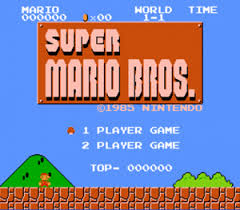
No beating around the bush here.

Gaming is an interactive medium, more so than others. You would think that belaboring this point would be like beating a dead horse, but sadly, you would be wrong. Gaming has even more of a burden than other mediums, perhaps, to hook players in the first few moments of the game. Given that games cost much more than any singular novel or DVD, gamers are more likely to be quite discerning when it comes to what titles they pick up and play. This difficulty is only compounded by the fact that there are countless titles released every year, each of which requires a time investment much more significant than that of a book or film.

So why is it, then, that a lot of titles seem to have gotten away from their roots in this aspect? Too many studios feel the need to create introductory sequences to their titles that are more akin to feature films than video games. When I was a kid, all I had to do to start a game of Super Mario Bros was to turn my NES on and press the "Start" button. Twenty years later, I'm trying to play GTA IV and I find myself sitting through a lengthy, largely uninteresting cinematic involving European immigrants on a freighter making vague references to the "atrocities of war" and other such over-trodden tropes of character development.
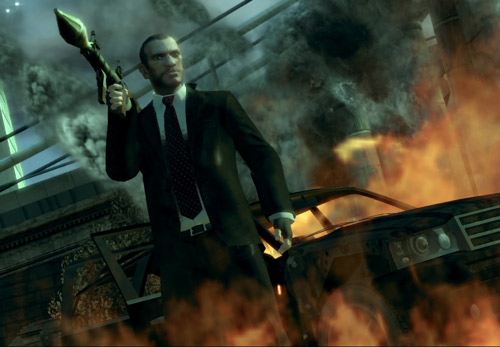
Maybe they should have started with this instead of a boat ride.

A work within an interactive medium starting out with interactivity should be a convention we take for granted. If a game is going to start with a cinematic, it needs to be short, engaging and to the point. Assassin's Creed begins with Altair jumping from a bell tower, disrupting a public execution and disappearing from gaurds in plain sight while an eagle cries. That is an excusable introductory cinematic. Mobsters on a boat is not, especially when it's followed by a halting tutorial (a subject for another article, I assure you.)

Simply put, a game should start with the game. After a useful recap of an admittedly convoluted plot, Assassin's Creed: Brotherhood starts with Desmond seeking refuge from the Templars while Ezio defends his stronghold from a siege. It all could have been done with a cinematic, sure - and some games would. But Ubisoft lets me run across the rooftops, fire the cannons and fend off invaders. After the obligatory Star Wars opening crawl, The Force Unleashed puts the player in control of Darth Vader as he cauterizes dozens of Wookiee limbs. These are just two examples of games that get it right, at least when it comes to introductions.

That's more like it.

At this point in the evolution of the medium, the standard solution to the non-interactivity of a cinematic is a quick-time event. But as I've written before, QTE's should be integrated in a way that makes sense within the context of that specific title's established gameplay mechanics. And since the time frame we're discussing is the first few moments of game play, there's no way that the rapport between a gamer and the controls of the game he's playing has been built up yet. The only logical conclusion is that a QTE, maybe even one that's properly done, has no place at the beginning of a game. The only counter-example that seems to make sense are the scenes in Assassin's Creed II where the player is reborn as Ezio alongside Desmond, where they kick and cry as the infant does so.

The first few moments of a game are more important than developers might realize. It's a crucial period when the gamer's impressions of the game are first being formed and is the perfect chance to capture their imaginations with innovative gameplay or a short, exciting cinematic - not bore them to death with feature film-like credit sequences. I'd tell them to save the cut-scenes for the end, but that's another column for another time.

Part two of my series will focus on another aspect of introductions: opening tutorials.

As for the readers, what are some of your most/least favorite introductory sequences?

 
1
BITMOB'S SPONSOR
Adsense-placeholder
Comments (8)
Blue
December 31, 2010


I am curious to hear (read) your thoughts on the Half-Life opening (Half-Life 1). It was an incredibly lengthy decent into the heart of  the Black Mesa lab facility. It was wildly intriguing, yet at the same time could be incredibly boring. While it certainly is a contributing factor in why I never replayed that game, it is one of the most memorable game openings I've ever experienced.


Half-Life 2 attempts a similar technique, although they give players a lot more control. But what players don't get is a weapon of any sort. (Although it is quite fun to hurl garbage at the Combine soldiers, prompting them to chase you.) In fact, the first time through, I was surprised at how far into the game you get before you actually get a weapon, and when you finally get one it's the meager crowbar. Yet Half-Life 2's intro is one of the most brilliant in a video game. Ever.


In fact, Half-Life 2 is great at giving players story elements without resorting to the dreaded cutscene. Yes, there are a few cutscenes, but most of the plot comes from character interactions, or video footage you see as you pass by a television set conveniently left on, or by peering out a window and seeing some important event playing out in the street.


HL2 proves that a video game can tell an incredible story without resorting to cutscenes or huge blocks of text. I think more games should follow its lead.


Dscn0568_-_copy
December 31, 2010


It's simple, but I did like the character profile intros used for Street Fighter Alpha 3 that show the character's height, weight, and nationality along with a brief profile. The Story Mode for Guilty Gear X2 used the same idea, but wrote the profiles like they were intelligence memos from a secret agency, complete with a threat level.


Picture_002
December 31, 2010


Being honest, as a person that like Half-Life (playing through HL2:Ep2 right now) and as much as I appreciate what it did for that style of storytelling, the story of the game is one of the least interesting parts of that game to me and the opening wasn't "great" to me at all. For all the griping about cutscenes, there's nothing any more substantive being added by the glorified corridor walk that is the opening of HL2 or games like Batman: Arkham Aslyum. And again, this are games I like and respect.


I'm sorry, and it's a matter of taste not "good storytelling" or "good game design" as some writers try to paint it, but there's nothing "good" about locking a person within a room or along a corridor with the illusion of controlling anything other than a camera while bad digital actors play out part of the plot. There's definitely nothing inherently better about it over a cutscene. Both techniques, done well are equally effective in accomplishing their purpose. But they won't speak to every person's tastes, as nothing does.


As for the "back to roots" put the player immediately in control, there seems to be some selective amnesia going on whenever people go there because I have strong recollection of sitting though cinemas at the start of games. Ninja Gaiden and Final Fantasy VI stand out above all. This isn't anything new not to mention it's really a meaningless comparison to draw comparision between a game like GTA which relies so heavily on story with Super Mario Bros. which is essentially devoid of any story past the "save the princess" premise.


Fine, a cutscene at the opening doesn't hook Matthew. I doubt this pains a developer that uses it nor anyone for whom a well done cutscene is an effective grab. Nor should it.


Blue
December 31, 2010


The difference between a cutscene and "being locked in a corridor" is that in a cutscene, the player loses complete control. Sure, in a corridor like the one in Half-Life 2, the player is not controlling much more than the camera, but it's the being forced to let go of that control that is jarring for players. It kills the immersion.


Consider the intro to Portal, where you are locked in a room until GLaDOS finishes her speech. You are STILL able to control the character and interact with elements in that tiny room. You can try to flush the clipboard down the toilet and smash the coffee mug against the wall, for example. Sure, it's limited, but it gives you something interesting to do while the intro is running its course. And don't forget that HL2 lets you throw things at the guards, if you want to risk an early death.


It is this interaction that differentiates video games from film.


Here are some examples that have nothing to do with story but everything to do with interaction: New Super Mario Bros. Wii allows players to break bricks during the end credits. Super Smash Bros. Brawl allows you to shoot at the figurines you have earned as the credits roll. Players are much more likely to sit through the credits of these two games than they are in other games when the credits are merely blocks of scrolling white text against a black background.


Picture_002
December 31, 2010


Very nice breakdown, Josh. It also has nothing to do with my point.


There's nothing to say what hooks Matthew and therefore he erronously attributes to being a better hooking technique in general actually is the case. Again personal taste, which is perfectly fine to have, doesn't somehow extend out to a general truth of one way or the other as doing things right and wrong.


Also, you're trumpeting a false sense of having control as somehow not breaking immersion because the designers at certain narrative points made a decision not to take complete control away. Commonplace with those corrider walks is the taking away of some control, a la the Gears of War, Arkham Aslyum forced walk while on comm systems that strips control of anything direction walked and camera. Half-Life has similar moments of stripped control for narrative purposes. Heck even Super Mario Bros. in it's rare moments of narrative (if one can call Mario being told the princess is in another castle narrative) allowed no control in those scenes.  If immersion is maintaining your level of control in a game, Even with your Portal example, you're trapped in an enclosed space with nothing of any substance  to actually do. Things are likely only distractions to GlaDOS's speech and the control in that instance adds little to nothing to the "game" of Portal or the narrative. I draw very little functional distinction between doing nothing in a cutscene and doing nothing in that cell. That isn't to say any of those examples are bad design. They just aren't necessarily "right" 


End of the day, what video games (particularlly narrative games) and film have in common is whomever is directing the experience has to make decisions on the best way and points of view for their audience to experience their work. For game directors, moments of allowng full control and stripping it are part of that and frankly not giving players control in certain instances can be to the detriment of their vision. Be honest, if the purpose of that mini-game during the closing credits is to get people to pay attention to the credits and not just get them to sit through them, it probably failed as what players didn't find it disinteresting and didn't play it probably were too busy with that mini-game to pay attention to whom directed the art or was on the QA staff. If it were to give the player a little extra game to play as a reward for completing the game, chances are it wasn't a failure of it's purpose.


Again, one technique isn't inherently the "right way" for a game to open or it's story to unfold if that is applicable. One may serve the purpose of the designers more than the other in specific instances. But the notion of implementing anything into a game for the sake of seperating it as a medium from another as opposed to serving the greater vision of what the game is intended to be would seem significantly more questionable thought than the decision to use a cutscene.


Blue
December 31, 2010


Absolutely. Perhaps I spoke a little too strongly. It seems to me that Matt's point is that interaction in a video game should start ASAP.


I think the hatred for cutscenes comes not from the fact that they are the "wrong" way to open a game, but that they are overused, when, as games like HL2 and Portal prove, they aren't always necessary.


But Valve has a very interesting method of storytelling unique to them. Instead of using cutscenes, they use environment elements: graphitti, GLaDOS's constant chatter, a news report on a TV screen, etc. This is a brilliant way to set up a story in a game, and for games like Portal, HL2, and L4D it's the "right" way to tell the story. But in other games it's not always a good fit. If every game on the market used this method, games would start feeling stale, and the "environental element story type" would be the thing we'd be complaining about instead of cutscenes.


Games need to carve their own niche into the market, and bringing new types of storytelling to the table is just one of the ways to keep things fresh.


N94101135_30056851_9373
January 01, 2011


While I'm glad I've caused so much discussion, I feel like I have to write another article to clarify my points/address comments.


1. I will admit that while my intention was not to draw a direct comparison between GTA IV and SMB, I guess that is what it looked like. My point was to, as Josh reiterated, to demonstrate that interactivity can and should start immediately or soon after a game is turned on. GTA IV takes its good old time before you actually get to play. Nothing interesting happens while you wait, the tutorial is ridiculous with its halting rhythm and when you finally get to play the game, it's boring and repetitive as hell.


2. Slightly off topic, the "story" of GTA IV is absurdly atrocious. All of the characters are one-dimensional caricatures and the notion of criticizing the idea of "the American Dream" a good four or five decades after its acknowledged death is laughable. Are you ever even given a choice not to be a ruthless criminal? No. Video game stories don't have to be fifty years behind every other narrative medium.


3. I think Gerren might have a little selective amnesia when it comes to my opinions on cinematics. As I wrote, the introductory scene to the first Assassins' Creed is one of my favorite such sequences in recent memory. But I think that if you're going to start with a cut-scene, you're putting yourself under a lot of pressure to hook the player by showing them something exciting.


4. Josh, I'm sorry, but Half-Life bores the absolute hell out of me. I think by the time I got around to playing it, it might have been a bit too late. I'm still going to try to finish it, though, unlike GTA IV.


5. Gerren, the notion that game developers don't care what players think about their design is exactly why I wrote this article. We should be educated and thinking critically about what we play and make our opinions known. We don't want video games to end up as the stale, stagnant half-dead mess that cinema has become.


6. I agree with Gerren on the point of the "corridor prisons." I think a lot of times they end up as token gestures that attempt to trick the gamer into thinking that they're in control when they're really not. Call of Duty does this constantly. But I much prefer being able to at least look around than having to sit silently in my chair for five minutes.


7. It's not as much a matter of personal preference as you might think. Overreliance on cut-scenes is bad for the medium's individuality and inhibits growth. Your thoughts on game design don't allow for any innovation. To imagine that we only have a choice between cinematics and "corridor prisons" is too narrow a mind set.


I agree that the directors of a game, when they're trying to tell a story, will at some point have to wrest control from the gamer. But I believe that just as continuity editing allows film editors to cut and splice their work to tell their visual story without the casual viewer noticing, down the road games will find their "invisible editing" where they can tell their own story while allowing players to discover that story in a way that feels more individualized, not just in some supericial "look around during the dialogue" manner.


Blue
January 01, 2011


You are bored by Half-Life 1 or 2? Because they are incredibly different experiences. I was determined to finish HL1 for the sake of completing it, but I never actually did. I got pretty darn close (well, it seemed like it anyway) to the end but I just couldn't bring myself to keep playing. For this reason, I avoided HL2 like the plague for a while. When I eventually did play through it, I found myself plaeasantly surprised by how great it was compared to the first one. It has so much more depth and a more interesting story.


The intro to HL1 was ridiculously long, but to this day I still admire the the developers for taking such a huge risk in presenting the HL world via the infamous elevator ride.


You must log in to post a comment. Please register or Connect with Facebook if you do not have an account yet.