Home
Home

This installment of Reggie's computer role-playing game retrospective features Origin Systems, whom you might know best as the developer of the Ultima series. Read on as he chronicles the studio's rise to fame, acquisition by Electronic Arts, and eventual downfall. Catch up by reading last week's look at Strategic Simulations, Inc., and don't forget to check back in a week for the next featured CRPG studio of the eighties and early nineties.
Origin Systems: We Create Worlds
1983 – 2004
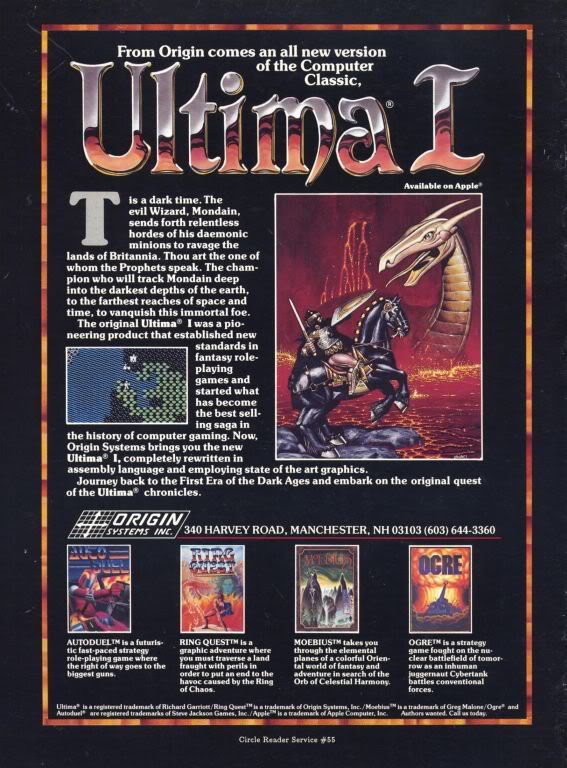
From his tentative steps with Akalebeth and then on to the first Ultima and its sequel, Richard Garriott clearly saw just how successful his computer role-playing game was going to be when the cash began rolling in and the phone calls never stopped.
Garriott (aka Lord British to his fans) founded Origin Systems in '83 partly as a result of the series's runaway popularity. The Ultima games would become the standard bearer alongside other pioneers such as Wizardry in defining the early years of the CRPG. Even in Japan, Ultima and Richard Garriott had received the kind of accolades -- and merchandising -- that had been reserved only for properties like Hello Kitty.
Ultima's amazing success on both sides of the world owed itself as much to Garriott's hard work as it later did in challenging the player later with social questions and deep narratives that expanded the fictional world of Britannia, such as when Ultima 4 revolutionized the genre again in '85 by replacing the typical world-destroying threat at the end, which stamped its chest with even more accolades from the press and CRPG fans in general.
Instead of facing off against a terrible evil, Ultima 4 tasked the player to overcome challenges in order to become the Avatar by learning virtues such as honesty, compassion, and valor. That broke the stereotypical mold of the combat-heavy CRPG. There were still plenty of monsters to slay, but leading a one man war against them was considered secondary to Ultima 4's goal of truly becoming a virtuous "hero."
Even with its CRPG success, Origin wanted to branch out and dabble in other genres living up to its moniker “we create worlds.” And create they did. From Garriott's days as a lone programmer, the company grew up over the years to encompass multiple teams working across a variety of genres as well as act as a publisher.
Along with Ultima's many incarnations over nearly two decades of gaming, there stood the sci-fi epic series Wing Commander (where I spent far too many hours inside its expansion packs and sequels in defending the Confederation) and Privateer (where I traded plasteel and fought religious zealots).
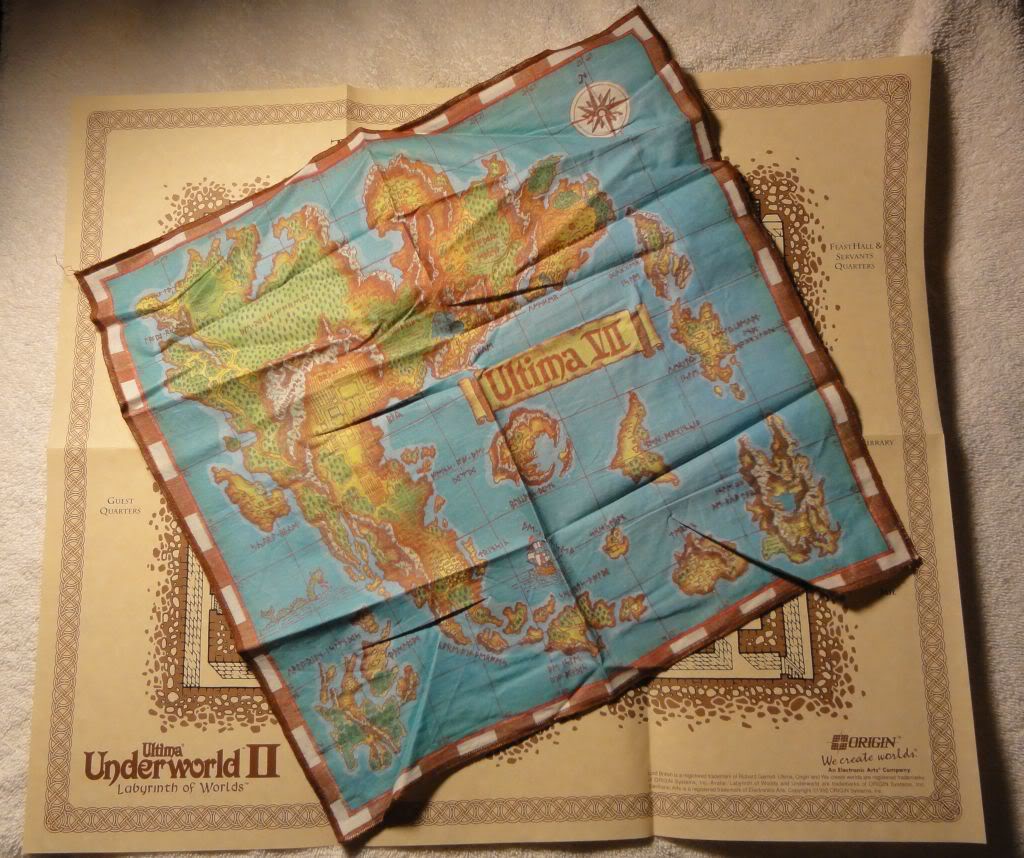
Along with a detailed and illustrated manual, Origin included a cloth or paper map with every Ultima game at no extra cost. The same went for several of their other games, like the Claw Marks booklet for Wing Commander. And it wasn't just Origin: A lot of PC games included fun extras like these back then. And they weren't called stinkin' "collector's editions" either. Pfft.
As a publisher, Origin would release Ultima Underworld -- developed by another iconic studio that would go on to create System Shock: Looking Glass. The Crusader series would introduce new meanings to the word "ultraviolence" with its isometric action, and Ultima Online would unleash the floodgates that would culminate in the race for the ultimate massively multiplayer online game. When I wanted to scratch my fantasy and space-sim itch, all I'd have to do was look for what Origin was doing next.
Continue to page two for Electronic Arts's acquisition of Origin and the unraveling of a CRPG stalwart.