


This installment of Reggie's computer role-playing game retrospective features Origin Systems, whom you might know best as the developer of the Ultima series. Read on as he chronicles the studio's rise to fame, acquisition by Electronic Arts, and eventual downfall. Catch up by reading last week's look at Strategic Simulations, Inc., and don't forget to check back in a week for the next featured CRPG studio of the eighties and early nineties.
On looking at Origin Systems prior to Ultima Online, it was as if they could do no wrong and were firmly in charge of leading themselves into the next generation. Magazine ads were splashed with computer graphics, bullet points, and teasing stories on new, cutting-edge adventures. Even when Garriot had sold Origin to Electronic Arts in '92, the partnership appeared to be an ideal one: EA's deep pockets and distribution empire coupled with Origin's creative energies couldn't fail. Looking at EA's catalog from the eighties into the early nineties, it seemed that they were also as interested in trying out new things and pushing the boundaries of gaming with creative titles such as Free Fall Associates's Archon: The Light and the Dark, Ozark Softscape's Seven Cities of Gold, and Binary Systems's Starflight.
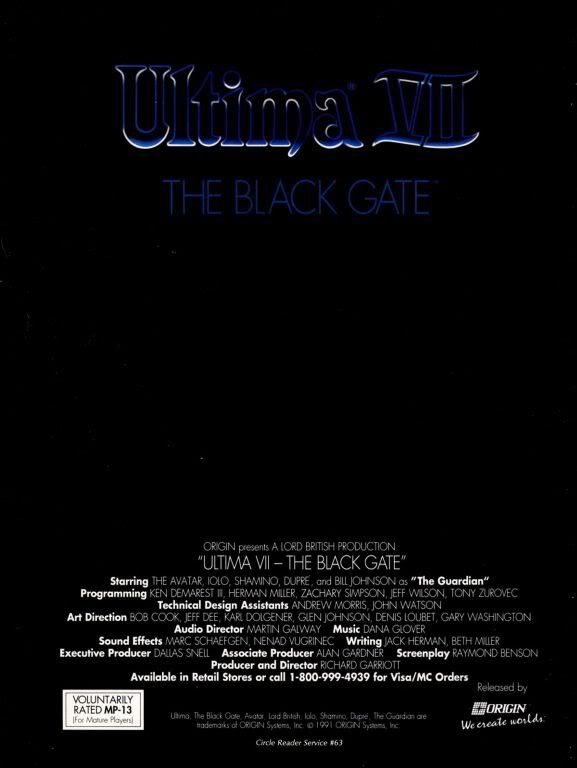 EA had already made early inroads into the lucrative console market as well, but their connections and war chests had also provided funding and star power for projects such as Wing Commander 3, which was regarded as the most expensive game ever made at the time in '94. With its use of virtual sets and live actors, having Biff Tannen on your wing seemed to be reward enough for the kind of financial moxie and corporate discipline that EA jazzed acquisitions with.
But not everything was perfect. Ultima 8's action-oriented approach was a radical departure from the successful formula of Ultima 7. Fans criticized it for its lack of polish, the missing detail and storied focus of its predecessor, and the Super Mario-esque platforming. I remember staring at the screen when I played this thinking that the game really looked good, but why is it an action adventure?
The answer was that EA's aggressive scheduling borne out of their sports-game mentality had forced Garriott and his team to cut corners to make Ultima 8's release date. What I and many other fans saw on their monitors was the result. “When it's done” wasn't something that stockholders wanted to hear.
Ultima Online was introduced to the world in '97. After an extremely popular beta session, EA sensed that they had a hit on their hands and quickly pushed for its development by cannibalizing team members who were then working on Ultima 9. After Ultima 8, fans like myself were looking forward to the next installment returning to what we loved about the series. I still have the giant Dragon Edition box sitting here.
But by the time the team came back to finish it, they found themselves racing against EA's schedule once again as well as several other problems that only added to its development woes. It could have used more time, but EA had wanted it out in time for Christmas in '99 -- no questions asked. And it showed.
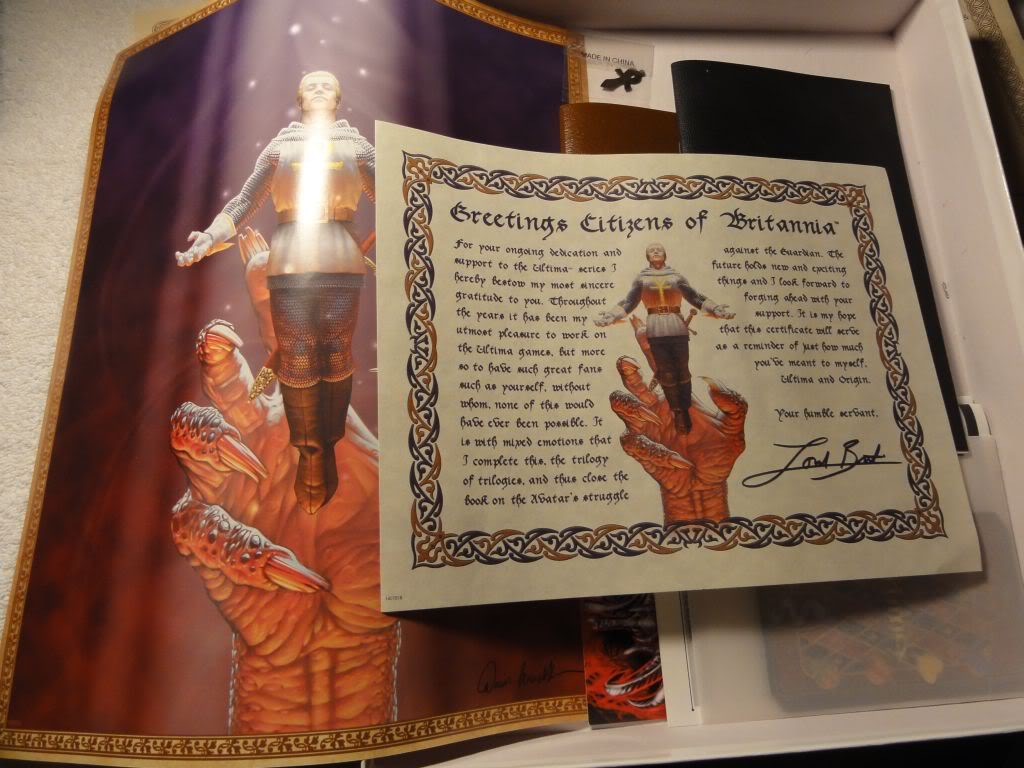
The Dragon Box edition of Ultima 9 came with a bunch of swag. Beneath all of this were two booklets, a deck of Ultima cards, a map, and a tiny ankh. The game also came with a soundtrack CD and another containing all of the past Ultimas, which allowed a late-comer like me to explore what he missed.
Ultima 9 remains a controversial title today with several citing it as the sole reason for Origin's demise while others laud its revolutionary concepts for being ahead of its time. The new Britannia was rendered atop the rising wave of new graphics accelerators, first-person shooters, and the 3D craze of the late nineties. With Bethesda already demonstrating its own panache for vast, open worlds with Daggerfall and Redguard, bringing the legendary series to life in the same way seemed only natural for Origin. When Ultima 9 turned out the way it did, it becomes easier to understand why many (including myself) regarded its lost potential with almost as much disappointment. It was, as Richard Garriott had put it, "the bastard child of Electronic Arts."
With Ultima Online's growing -- and paying -- audience, EA began to focus more on its welfare especially after Ultima 9's lackluster splash. There would be no Ultima Online 2, nor would there be another Ultima, period -- unless it was fan made. EA would essentially turn what was left of Origin to focus exclusively on Ultima Online, a process that would come to define EA's Borg-like impression that gamers had about what the publisher routinely seemed to do with its acquired developers.
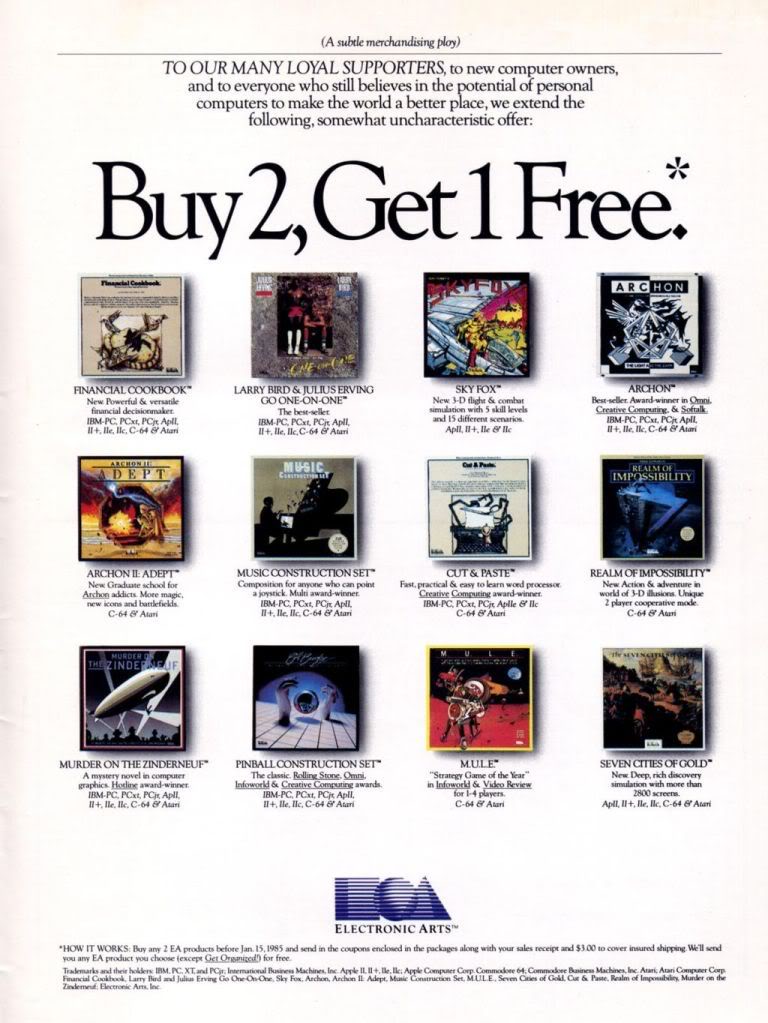
EA was something of a different animal back then.
Many of its designers had already left and now more would be joining them. Richard Garriott, like Interplay's Brian Fargo, left the house he had built shortly after the release of Ultima 9 to pursue new interests that lay outside of the series that made him a household name among the CRPG community. Although his departure and contractually obligated silence shortly after the troubled state of Ultima 9 had raised eyebrows, his interviews afterward reveal a designer eager to do more outside of Ultima in the online space, a point that EA had apparently disagreed with.
In 2004, Origin simply ceased to be. By that time, it was only a battered and broken shell of the multi-genre titan that it had once been, now reduced to being the equivalent of a janitor assigned to provide the upkeep needed for Ultima Online to exist. Its famous titles would exist only in memory or meet the arcade fate of Wing Commander on Xbox Live Arcade.
EA's soft about-face today -- along with CEO John Riccitiello's admission that the company had “blew it” when it came to acquisitions like Origin -- can only hint at what could have been had the same attitude existed back then.
BioWare would have been in good company.
Check back in a week for the next installment: Sir-tech: The Old Standard. See two more Origin ads on page three.