
Separator
The (Impending) Death of PC Gaming
Sunday, September 26, 2010

As a kid in the 1990s I was fascinated with the widespread acceptability of the desktop computer. With the early days of the internet and the ever-increasing power of computer hardware, it was easy to be thrilled at the prospect of the new wonder machine that was promised to change all of our lives. The idea of a home computer was exciting to me at that age and often I could be entertained by nothing more than the word processor or MS Paint program.

                                                      

Then someone told me I could play games on this machine. Not only that, but a majority of these games I had never heard of. The first game I owned and played was a team based first person shooter called Tribes. I was elated. So started my love of PC gaming.

Fast forward almost fifteen years later. Now I don’t even consider PC gaming a viable option. What happened, exactly? What has brought PC gaming down in burning shambles, like a forest being purged by bright fire into the night?

A lot of things, really. Allow me to discuss the various.
 
PC gaming has always seemed to have an admission fee attached to the platform. Of course, this is because the games you can play are purely based on hardware. Those who are of the console persuasion may think that this is an odd occurrence due to the fact that console gamers are also limited to what they can play by hardware, but in a very different way. Lately, though, more and more hurdles have popped up in the way of those whom would like to hang on to PC gaming.

Who or what is at fault? That is a tricky question.

To be simple, there are three major blockades in the body of water that is PC gaming. As usual, and the most expected problem, is hardware. No surprise there as this has always been the issue with choosing PC over console. As of late the rules have changed. Piracy has become more rampant, and as such publishers are far more weary of a PC release. Point in fact, some longtime PC supporters have completely avoided the platform, or have gone out of their way to make the process of playing on PC so frustrating that those of us who have tried to stick out the rough times simply have no other option but to walk the proverbial trail of tears back to console gaming only.

Let’s take a look at the various troubles and impending death of the PC gaming platform.

ISSUE ONE: Hardware                    
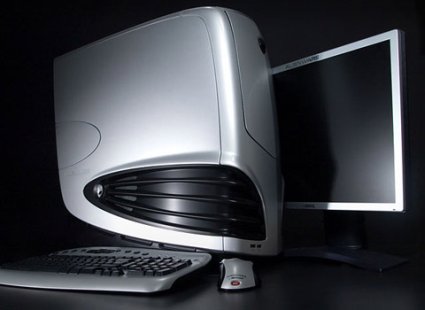
The hardware hurdle has always been the big nullifier for those wanting to play on the PC platform. This issue was much harder to get around in the early day of PC gaming, as home computers simply weren’t built with any kind of relative power. Now a days you can’t sneeze in a Best Buy without hitting a laptop of desktop with at least six GBs of RAM and a video card. In the early days of PC, the video card was the biggest issue to get around, as the hardware expanded to include such things as “3d accelerators” and “Visual shader extenders”. In a way there was also an accessability hurdle to jump that many did not feel the need to go after. Figuring out hardware was a challenge before computer use before so prevalent. Now, though, the hardware problem has become something else entirely.

As I said, most people have computers with a large amount of power, the problem is that this may not be the right kind of power. Often times, what you need to play a certain game isn’t always stated and can lead to problems. What kind of problems? Allow me to explain.

Not being an XBox 360 owner, I opted to try and buy Bioshock 1 for PC. I figured this would be my only chance at playing the game. Little did I realize that the suggested requirement of an NVIDIA video card should have been taken literally, as the game would not even start up due to the ATI card that was living in my system. After hour of searching, being frustrated at potentially losing sixty dollars on a game I would never get to play, and digging through practically all of Google I found others with a similar problem. As it turns out, a small group had been working on a workaround to make the game work with other cards. Of course, 2K Games refused to accept this patch as official, and promptly auto patched the game to not be usable with said patch.

A few months ago, I finally bought a new video card and was able to play Bioshock. Well... At least I got to play it.

I guess I should be happy the game came out on PC at all, because I feel that if the game came out as of late I may not have had the chance. Why? Let us continue, shall we?

ISSUE TWO: DRM

Many games now come with some sadistic form of DRM. What is DRM, you ask? Digital Rights Management is a fancy phrase for “You bought the game, so only you can play said copy of that game, sucker”. DRM can be as simple as a serial key on the instruction manual, or something stupid like requiring an internet connection on at all times so your copy of the game is validated, and if any time you disconnect your save is deleted.

Wait, what?

Some DRM has become extremely frustrating to deal with. So much to the point that most will chose to purchase the console version of a game, even if the PC counterpart is cheaper (which as became a trend as of late. Surely a method to increase PC game sales). The most frustrating for me would probable have to be Steam. Here comes the exposition.

I bought Left 4 Dead 2 for PC last week, as the game was only twenty dollars, and much like my Bioshock experience, was maybe my only chance to play a game that will never come to my platform of choice. I carefully studied the back of the box to make sure I had the ability to play said game and all seemed clear. Though, I was confused by this little passage (taken verbatim):

“Product offered subject to your acceptance of the Steam Subscriber Agreement. You must activate this product via the internet by registering for a Steam account and accepting the SSA.”

Little did I realize what I had fallen into. I got the game home and was surprised to find the autorun for the game was not the installer for the game I bought. God, no! Instead, a window to install steam kept badgering me. So, I jumped through the hoops of Steam, hoping that once I installed the program I could finally just install the game and play.

Of course not.

Steam proceeded to inform me, after installing the game off the disc, that said disc only contained 80 percent of the files and I would have to download almost 2 GBs of extra files just to install the game. Why is this a problem? I am on a satellite internet connection with a download cap of 1 GB. Didn’t I purchase the game already? Aren’t I entitled to the ENTIRE file?


So, my computer went on a trip to a friend with real internet. After three days, I was finally able to play the twenty dollar game I bought. Yay?
                      
Why is DRM so annoying? Are publishers intentionally trying to scare gamers away from PC? No, not at all. Sadly, they are just trying to protect what is theirs. This leads us to my third, and most obvious issue.

ISSUE 3: PIRACY

I didn’t include piracy along with DRM because I feel the biggest issue with PC gaming, and what I feel will inevitably kill the platform, is that developers simply do not want to take the risk. The amount of titles, and the size of PC game selection at most stores as dwindled to a sad mark. Most Gamestop stores do not even put their PC section on display anymore due to the small amount of titles and the even smaller market for said titles.

More specifically, games that were coming out for PC before aren’t even being considered due to piracy. The best example I can give is that recently Super Street Fighter 4 was taken off the PC release list. Capcom specifically stated piracy to be the main issue for cancelling the release, even though the PC version of Street Fighter 4 was not only well received but also well supported by a strong community.

The fact is that more and more developers will start avoiding PC completely. Less chances will be taken. Soon enough, the platform will become desolate. After all, why should publishers release a game on PC that will have more sales, and in theory more security when released on the console platform?

I find the trend to be truly heartbreaking, as my love for PC gaming has always been strong. Soon enough we will all have to mourn the loss of a great gaming platform that nobody ever really paid attention to in the first place.

 
2
BITMOB'S SPONSOR
Adsense-placeholder
Comments (6)
Nick_hair
September 26, 2010

The first two points you mention are why I don't like PC gaming: it's too complicated. I don't want to play guessing games with system requirements, and I don't like the hassle that sometimes comes with installing games. Give me a console anyday. At least I know the game will run when I put it in the system.


About two months ago, I wrote an article detailing some of the problems I have with PC gaming (http://bitmob.com/articles/hey-pc-gamers-wanna-argue). The Bitmobbers that responded gave me a deeper understanding of the advantages of PC gaming, so I get why some people prefer it. But I'm a simple dude with a simple brain; I just want to put the game in the system and play.


Edit: How do I hyperlink in comments? See, told ya I had a simple brain.

5211_100857553261324_100000112393199_12455_5449490_n
September 26, 2010

I think Steam does a pretty good job of keeping PC gaming alive.  During the weekends, there's around 2 and a half million people logged in and either idling or playing something.  And that's just people using Steam. 


Do the downloads/updates suck for people with capped connections? Absolutely.  If more ISPs start capping and charging for overages (which, if capping becomes the status quo, will happen a lot) the group of people downloading games and paying for the honors will just inflate to a "norm" status probably... something to be expected.  


Trust me, I wasn't happy when I bought Half-Life 2 and found out I still had to download it and decrypt it, but on the other hand, once I lost those CDs that was sort of a non-issue; I just re-downloaded it and that was that, and I was suddenly very thankful for Steam.


I think digital distribution's gonna end up being the norm in the future, and we'll probably see less hard boxes in stores (And that will be the day that I am VERY VERY SAD).  I still remember opening King's Quest 6 for the PC with all the goodies inside which was, for me, the best part... Don't ask how long ago that was.  I was a lot shorter.  Sad to see businesses simply not give a fuck, going for the bottom line instead (profit) and skipping a presentation in lieu of a recyclable box and two discs.


On the matter of guesswork, honestly, there are enough tools at your disposal to take the guesswork out that it's not a very good excuse for not being a PC Gamer, unless you literally bought your computer on Dell.com and did absolutely no research before buying it (you should know what you buy.  rule one).  I went to Newegg.com two years ago with my tax money and pieced together, with new parts, a machine that cost me $600 (with a modest videocard and a "mere" dual-core CPU) and to this day, it plays Starcraft 2, World of Warcraft, Crysis, Bad Company 2, Batman: Arkham Asylum,  Prince of Persia, Bioshock, Oblivion, Borderlands and Fallout 3 (to name a few) flawlessly with little to no tweaking.  Common sense dictates that, given the age of your computer, you may or may not be able to play newer games.  If you bought your Compaq Presario in 2001, chances are you ain't gonna be playing New Vegas.  That's where common sense comes in.


Standardizing rigs (which is specifically what an Xbox 360 and a Playstation 3 is) stagnates hardware and, by extension, software development, reducing quality of competition and shoehorning developers into a set rules list of what they can and cannot do.  Face it: If computers (gaming and non) hadn't continued to evolve, you'd still be playing on your Playstation 10 years after the fact.  Consoles are derivative of the consumer PC market.  When PC gaming dies, so too does console gaming.  I don't think anyone in any associated sense will allow that to happen.


And let's not forget the Indie boom that the internet and the changing face of videogame distribution have afforded game developers, putting games into more hands that would previously not have gotten a chance to gain exposure without being a member of the ASP or the like (If you remember the ASP, you're made of bones).  I wouldn't be playing vvvvvv right now without Steam, and for that, I thank them.


So, relax.  The scene is changing.  It's not the end of the world.  People adapt better than computers.


[Edit:  Yeah, DRM kept me from being a customer of Assassin's Creed 2 with the "Always On Internet Required" restriction.  Mind you, I could have pirated it and played it just fine, but I opted to simply not buy it and end it at that.  But I agree.  Developers need to come to a consensus that pirates will be pirates, and screwing over your potential customers wins you absolutely zero brownie points.]

Default_picture
September 27, 2010

I don't really see the bioshock problem you had as a problem. Let me guess, your PC was from around 2002? 2003? Do you really expect a 4-5 year old PC (at that time) to run bioshock? I mean, do you expect your Xbox to run bioshock too or is it acceptable in your mind to buy a 360 to play it?


Just like you have to buy a new console every 4-5 years so you can play the latest console games, you have to buy a new PC every 4-5 years so you can play the latest PC games. Maybe its easier to accept consoles in that matter because Sony tells you "this is the PS3" and you don't have a "PC company" that tells you "this is the PC2". Today a 200$ video card can eat and spit out the consoles in 1080P at 60FPS, things like video drivers update automatically through steam and windows 7 auto fixes most problems with a click of a button.


Piracy isn't an issue, video game companies make it an issue. What do I mean by that? First of all the PS3 proved that zero piracy (at least until two month ago) doesn't make game sales better. The PS3 actually has worse games per consoles ratio then the 360, a console plagued by piracy (one million baned consoles last holiday season) so zero piracy doesn't mean better sales, pirates are pirates and they wont pay for games. So now that we astablished that piracy doesn't hurt PC sales then what does? The publishers of course. I'm a PC gamer, I got a powerful PC, so why did I buy AC2 to my 360 and not my PC where it runs at 1080P at 60FPS? Because it came 4 months latter, so why should I wait? Because it had a draconian DRM, why should I suffer? Game companies release games late, filled with DRM, without dedicated servers and so on so PC gamers get f***ed and then the publisher say that PC games sales are declining.


This year the PC is the best "console" around, with Starcraft 2, Cataclysm, civ 5, FFXIV and so on show both in scores and in sales that PC gaming is alive and well in spite the publishers attempts to kill it.

September 27, 2010

Actually, at the time of Bioshock's release, my computer was only a year old and my card was new and fit the settings. As I said in the article, because my card wasn't NVIDIA and didn't support NVIDIA's shader 3.0 technology, I was unable to play. Point in fact, I wasn't the only one to have this problem.


No offense, you're not paying attention if you think piracy isn't a problem, so please don't throw around sentences as if you've stated a universal truth. As you stated, pirates are so because they don't pay for games. Thusly, that is one game sale missed. Of course PC sales are hurt by piracy. Maybe not always being reflected in overall sales, but definately potential sales. Less games are coming out for PC and instead staying on console which means a loss of potential revenue.


I do agree that publishers shoot themselves in the foot, but they really have no other choice. Console games are inherently protected from piracy in a majority because of the technical know-how it takes to do so. However, just about anyone can download a torrent and follow instructions on how to run a keygen.


Final note: Best? Really? You listed two games that aren't even out yet, and another two with installed user bases. I wouldn't even put PC ahead of the DS in terms of this years game quality. But, that's me.

Jayhenningsen
September 27, 2010

Pirated games equating to lost sales in a one-to-one ratio is a logical fallacy. It's more probable that the pirating people would simply not buy the game on PC in the first place.


If you look at some of the cutting-edge technology that they're developing for future personal computers, it will resolve or bypass a lot of these problems. Some companies are working on modular stackable computer components and things of that nature that will make upgrading a breeze.


I like the fact that I can make my PC more powerful by changing a component or two. However, I can't upgrade a PS2 to play PS3 games. For me, the flexibility is worth the trade-off for the added complexity.


The example you give for DRM is really just the way Steam functions. You're not really talking about DRM. Steam is largely a digital distribution service that forces you to keep your games up-to-date to ensure a more consistent multiplayer experience. I'm sorry you don't like it, but that's not really an argument against DRM.


PC games are almost always at least $10 cheaper than console counterparts. The reason has nothing to do with boosting sales. It's because you don't have to pay licensing fees to the console manufacturer to release a game on a PC.

5211_100857553261324_100000112393199_12455_5449490_n
September 27, 2010

Unless you're Modern Warfare 2, and then you get to pay $10 just because the publishers know you will. ;)


Quoting a reply: "Actually, at the time of Bioshock's release, my computer was only a year old and my card was new and fit the settings. As I said in the article, because my card wasn't NVIDIA and didn't support NVIDIA's shader 3.0 technology--"  Uhm, I might be misunderstanding this, but it seems you just contradicted yourself pretty much immediately.  If it was new and fit the settings, it would have played the game.  It wasn't compatible with the game, so... I'm assuming this means it didn't fit the settings and, more to the point, probably not as new as you would lead one to believe.  Can you explain that more?  I'm genuinely lost.  I hadn't heard of this problem at all; out of the fifty or so people that I know that have owned Bioshock on the PC, none of them had issues getting it to play.  It wasn't exactly known for having earth-shattering system requirements... Point in case, it ran off the Xbox 360's GPU. ;D


Also, the only game he listed that had an installed player base was Cataclysm.  The rest is subjective.  Civ 5 is out, FFXIV is out and has been in open beta for a month and Starcraft 2's fresh as of not even two months ago, iirc.  Looking back on console releases thus far this year, I'm gonna have to give the nod to the PC.  I'm just hurt nobody mentioned ME2, which was thuper-thuperior to the console version.


Also, nobody mentioned vvvvvv.  By itself, that should have clenched it for the PC.

You must log in to post a comment. Please register or Connect with Facebook if you do not have an account yet.