Home
Home

I have to agree with Matthew. Developers need to make it more fun to tread down the moral middle road. Good and evil are both getting boring.
Ask me who my favorite fictional characters are and you might be surprised at who’s at the top of the list. It’s not Luke Skywalker, Indiana Jones, or Darth Vader -- though they’re up there. Heroes and villains are easy to figure out. Saving the world or destroying it could both potentially be a lot of fun to watch. No, the characters I find more interesting are the mysterious, ambiguous ones: Boba Fett, Clint Eastwood’s The Man with No Name and pre-Return of the Jedi Han Solo. Unpredictability (Chaotic Neutral for you Dungeons and Dragons types) is where it’s at.
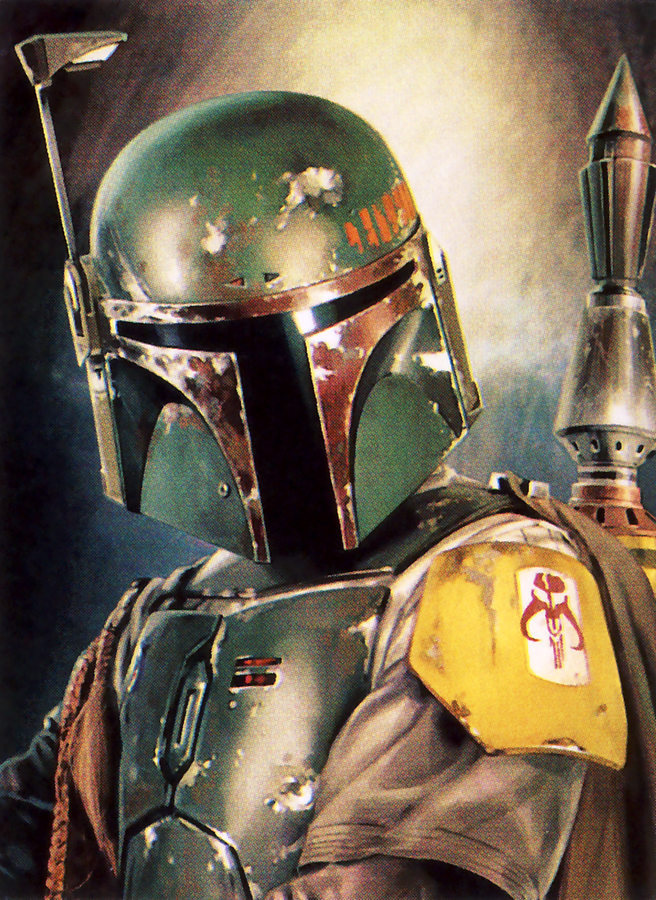
WWBFD: What Would Boba Fett Do?
Watching them analyze a situation and trying to predict their actions provide far more rewards than the thinly drawn heroes and villains we’re used to. When I play a game that lets me create my own character, these are the people I try to emulate. When Han Solo walks into a room, you don’t know if he’s going to shoot someone, save them, or come up with some other unthinkable solution to the problem at hand. The problem is that games rarely, if ever, make it easy or even possible for players to create these types of characters.
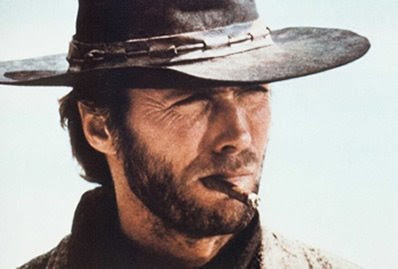
What I want out of an RPG character.
Morality systems always seem to get a lot of coverage in the gaming press. The first game that I played that had a morality system was Bioware’s Star Wars: Knights of the Old Republic. You could kill people, or you could save them. In that respect it wasn’t very complex. However, if you went too far down the evil side, you might end up having to kill some of your companions. Your visage might also become scarred and decrepit -- a reflection of your evil deeds. Unfortunately, the game didn't offer any morally ambiguous solutions to the problems posed by the game.
Another of my favorite RPG series, The Elder Scrolls, purports to let you be and do whatever you want. Many of us know that claims like these are almost never what they seem. Play the part of the hero and you’ll end up gathering herbs in a troll-infested forest for an hour. Sure, you could be a villain and kill whatever old hag is holding your spell tome hostage, but let’s see how close to the city gates you can get before the guards are on you. Can’t I threaten the woman with a sword until she relents and gives up the goods?
Want more speech options to persuade the bad guys to kill themselves?
Fast forward to about half a decade after these games and the story hasn’t changed much. While I would personally vouch for the fact that Bioware’s Mass Effect revolutionized RPG dialogue systems, I still found it lacking in moral ambiguity. A typical quest dialogue tree might read as follows:
NPC: Yes, I know the Turian you speak of. Would you like to know his location?
Player [Paragon Response]: I’d gladly pay you 10,000 credits for that information, good sir!
Player [Neutral Response]: Yes.
Player [Renegade Response]: [Gouge his eye out with your pistol]
There's not much ambiguity here. Can’t I do any background checking into this guy? Perhaps I might find some compromising photos of him on the Galactic HoloNet that I can blackmail him with. Or maybe instead of removing vital organs, I can just rough him up a little bit or intimidate him with my beard. Alas, it is not to be.
Bethesda’s Fallout reincarnations actually go so far as to acknowledge the player for staying coolly neutral throughout the game’s many violent occurrences. Maintaining a neutral alignment throughout the game will actually net you your own unique perks and buffs. There’s still a glaring flaw with this system, however. You don’t necessarily get neutral alignment by thinking of creative, morally ambiguous solutions to problems.
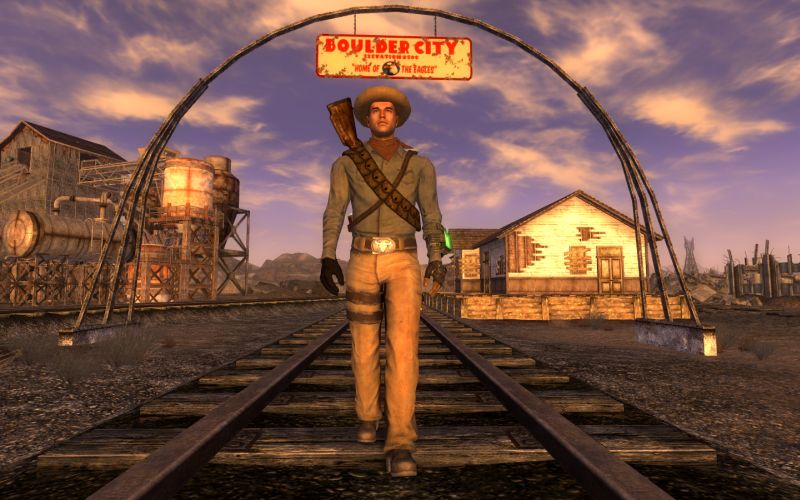
Still not quite there yet...
Instead, I’m sure most of us achieved neutrality by simply balancing out our good and evil deeds. Did you find yourself forced to pay off that old junkyard woman for her dog’s brain? Didn’t you realize you could just kill her and all her dogs and take what you wanted? Oops. I guess if you want to remain neutral you’re going to have to randomly select a few innocent civilians to shoot before you can get your karma back down. In the real world, we wouldn’t call this kind of person morally ambiguous --we’d call them homicidally bipolar.
There’s no need to pretend that video games cannot deal with complex morality systems in their narratives, so I’ll refrain from naming names. There’s also no conceivable reason why this same ambiguity can’t be implemented in actual player-dependent game play. Let’s face it: most morality decisions in games are rather token and superficial.
Not exactly a picture of subtlety.
Ostensibly, the only ways we can think of to express concepts of good and evil are saving the damsel in distress or setting off an atom bomb. And at this point, I’d take even a token gesture like “pull out your revolver to threaten this guy” to get me on my way towards becoming a more realistic gaming hardass. Until then, like my beard and dual revolvers that I carry around with me wherever I go in life, I guess some things will just have to be left up to my imagination.