Home
Home
The games may not seem like they have anything in common, but Gil makes a good point about how it could completely change Call of Duty if they adopted Mario's approach to taking damage. Actually, why stop there? They should make you collect mushrooms and battle a Koopa Kid at the end of every level. That would be great.
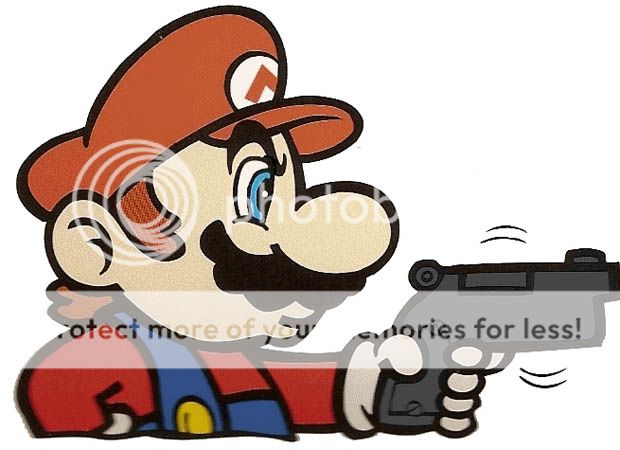
Mario is more hardcore than we give him credit for.
Although we'll never know if the sensation of getting hit by a Goomba is akin to the pain of being shot, in a gaming sense they're one and the same since both result in the player taking damage. However, based on the “realities” constructed by the developers of certain first-person shooters, I'd rather get shot than be tackled by a charging Goomba.
Games like Call of Duty: Modern Warfare 3 attempt to push the boundaries of virtual realism, but with all the blood, grit, and explosions depicted in them aside, getting shot doesn’t seem all that unnerving. All I need after being pelted with a few enemy rounds is a quick break from combat before I'm back on my feet.
Damage permanency isn't a concern in games like Call of Duty or Mass Effect 2. Time heals all wounds...literally. A player's ability to recuperate from a barrage of bullets just by hiding behind a wall is a convenience that Mario would kill for. If he takes a Bullet Bill in the eye, crouching behind a green pipe won't make him taller again...so why is it okay in all of these other titles?
In Super Mario 3D Land (and all previous Super Mario platformers) maximum health isn't repeatedly given, but constantly earned. Likewise, although certain stages are significantly easier to complete while garbed with certain power-ups, having the necessary item is also not guaranteed. This is because accruing damage in a Mario game is designed to strip players of their advantages, forcing them to rethink strategy and proceed with increased caution. In essence, there's always been a direct correlation between damage taken and player experience within the Super Mario franchise. Getting hit makes the game harder.
This is contrary to how recent shooters utilize damage in orchestrating a game's challenge level. Sure, getting hit still kills you, but beyond the need of seeking cover to replenish health, sustaining damage minimally affects player strategy.
Like tacky buttons on a vest, damage is more flair than an innate determiner of a game's difficulty.
Near-death screens are all but cliché in the realm of shooters. These few seconds of blood-splatter are common indicators in action/adventure games to signify player damage.
The problem? These visual cues are precisely that: They're strictly cosmetic, having no significant effect beyond supplementing a dwindling health bar and maybe impeding the player’s vision for a brief moment.
Why hasn't damage in action/adventure shooters evolved beyond these generic prompts? Why haven't the developers of Call of Duty and other action games adopted Mario's model of permanent strategy-altering player damage? Imagine being forced to traverse through a Call of Duty campaign after catching a bullet in the leg and having trouble running, or the increased tension of knowing another biotic pull could dislocate Commander Shepard's shoulder.
I don’t know where developers got this urge to coddle us, but they need to stop it and start putting damage to constructive use.
After all these years, Mario still has a few lessons to teach major developers about evolving the gaming landscape. We can only hope that given more time our favorite action/adventure franchises will be half as badass as our favorite mustached mascot.