Separator

Complexity Is Killing the Japanese RPG

Default_picture
Friday, August 06, 2010

Editor's note: Eugene's got an interesting premise behind his criticisms of the Japanese role-playing game. Instead of bemoaning storytelling, he notes that the gameplay systems have grown so complex that they turn off players. Do you find this to be a problem with current JRPGs? Let us know in the comments! -Jason


Since the Japanese role-playing game has returned to the spotlight again, it's a good time for yet another JRPG-inspired article. Let's talk about the classics -- or more specifically, what elevates a JRPG into "classic" territory. Common answers include endearing characters, epic storylines, and outstanding visual/aural presentation. These are valid points, definitely, but it's arguable that most modern titles are able to better (or at least equal) their classic counterparts on the technical level.

Final Fantasy 6's tale of Rebellion versus Empire was exciting almost two decades ago, easily equaled now by any random universe-ending calamity in scope or narrative. Cecil of Final Fantasy 4 is a likeable cut-and-dry paragon of justice, but even Chun-Li has more backstory than he does.

Likewise, while we always fondly remember the sprite graphics and chiptune synthesizers of the classics, you can't compare them to the visual and aural flair of modern software. While it's true that Nobuo Uematsu and Yasunori Mitsuda created some of the most iconic and popular tunes defining the 16-bit era RPGs, claiming that musical talent has only gone down since is close-minded and immature. Popular opinion is seldom the best choice, and any creative artist worth his or her salt knows that stagnation is the cardinal sin of the creative mind.

To put it simply, the JRPGs of today have demonstrated more than enough potential to convincingly usurp the JRPG throne from the classics. Yet this isn't happening, at least from my point of view. So what sets the classics apart? What differentiates the classics from their flashy successors lies in the ease of picking up and understanding the gameplay mechanics of each game, coupled with critical volume of gamers willing to give it an initial shot. It's all about complexity.


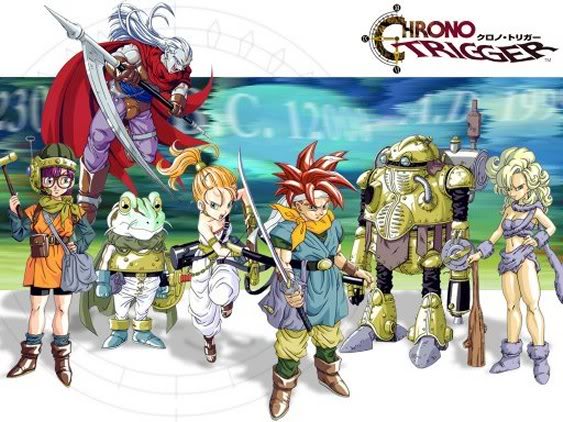
Anyone that had experience with games could pick up any JRPG from the pre-Final Fantasy 7 era and understand the gameplay system within 5 minutes. The menu/ring-driven system is straightforward, differing only in presentation and style between games. The real meat that differentiates each is the strategies invoked and how to go about executing them effectively. Committing a triple-tech in Chrono Trigger or a summon in FF4 have different implications to strategy, but executing them involves nothing more than choosing the skills directly from their menus. Easy to learn, hard to master. The minimal learning curve allows gamers to repeatedly step into the roles of the protagonists long after first completion to enjoy the game without it turning into a cakewalk.


The hardest thing to understand here is Kefka's fashion choice

Now consider the recent Final Fantasy 13. No matter how much prior experience one had with JRPGs, few could pick up FF13 for the first time and immediately understand how the system works without going through the first couple of hours. I freely admit that even after attaining 100 percent completion, I still don't fully know how to exploit the paradigm system. 

The same can be said for most modern games. Star Ocean 4 even encourages the player to go through its lengthy tutorial system out of sheer necessity. Only through multiple reiterations does one fully grasp the system to use it effectively to one's advantage.

For games like Resonance of Fate, the less said the better. Only those dedicated enough to spend significant time to learn the system will experience the full game. As a result, not only is it harder to get started with these games initially, but the impetus for repeated playthroughs months or years down the road is lessened owing to the steep learning curve -- even if the game itself is excellent.

Unfortunately, JRPGs of today have inherently created significant barriers to entry even for existing fans. No doubt, some gamers revel in cracking open the intricate gameplay to attain mastery over the game, which is fine, but I've always felt the draw of JRPGs came from formulating effective/complex strategies with a leveled-up (or down) party to defeat a tricky foe and the reward of plot progression using nothing more than a simple-to-use interface like a menu system. Am I the minority here?

I don't want to jump through hoops in order to be eligible to potentially successfully execute the same strategies. Final Fantasy 8 began this annoying trend with the "Press R1 at the correct time for additional damage," and this has since evolved to the point that the 'standard' JRPG now plays something like Devil May Cry but with broken controls. 

What about upgrading your inventory? It's no longer enough to reach the village after braving through a tough area and reap the rewards by purchasing the GodSlayer from the very expensive shop. Instead, I get to buy a recipe for the GodSlayer. And the raw materials are scattered all across the world. And I need a Level 50 Synthesis ability. Oh, joy!


Anyone care to even begin to describe what's happening here?

Of course, you can attribute the current evolution of JRPGs to the demand from fans for continual innovation. No longer are we content to use the ancient menu-driven system or fight through random encounters with invisible enemies. The sudden influx of FF7 fans weaned on twitch reflex games like Wolfenstein and Madden meant JRPGs had to evolve to include more elements of interactivity during battles (button mashing, hadoken motions) or risk losing this lucrative segment of self-proclaimed RPG nuts.

It's deeply saddening that FF9, the only post-FF7 in the series game to utilize the simple-to-pick-up gameplay of the past, is generally treated like some bastard child and looked upon with disdain by the general FF7-loving fandom. The main reason? The gameplay was too simple. Ironically, fan-favorites FF6 and Chrono Trigger play similarly FF9.

Modern-day JRPGs have evolved to become more complex and engaging, but in slightly altered ways. Instead of challenging the player to overcome obstacles using basic rules, gameplay has morphed to force the player to utilize complex mechanisms to achieve straightforward tasks. The player doesn't have to think more; they just have to do more. I acknowledge that things cannot remain stagnant in order for the genre to progress, and it should come from quality, not quantity.

Good writing, artistic direction, musical score and of course, a solid gameplay system are steps in the right direction. Hard-to-pick-up gameplay, mundane fetch-quests, and artificial game-length padding is not. Developers need to remember that the most important criteria for any game is its fun factor and that added layers of needless complexity usually only serve to frustrate players.

After all, innovation is often understood as a different but simpler way to execute a traditional task.

 
Problem? Report this post
BITMOB'S SPONSOR
Adsense-placeholder
Comments (15)
37893_1338936035999_1309080061_30825631_6290042_n
July 28, 2010

I think you make a great argument, but let me qualify it a bit. I believe complexity is killing the console JRPG.

Portable JRPG's like Golden Sun and, most recently, Dragon Quest IX are still invoking the same feelings as the classics you mentioned (I would even argue they're doing it better, with cleaner menus and systems.)

Console JRPG's such as FFXIII are throwing a ton at players, but it's not really their fault. With the rise in complexity of all games and genres on consoles, JRPG's are just trying to hang in there.

After thinking more about it, I plan to write an article of my own about this, so I'll keep my point short: I think there's going to be a point where the JRPG genre will cease to exist on consoles. It will live on in the background or behind the scenes of its contemporaries, but the classic JRPG will just be too much of a dinosaur to be a viable money-maker. 

Default_picture
July 29, 2010

@Chase I'm assuming here, but I believe Squenix decided to release DQIX on the DS because of its incredible market penetration in Japan; not so much because its unsuited for a home console. Ironically if you really think about it, the JRPG is actually the most ill-suited type of game for portable consoles. Its not a genre best enjoyed in 5-10min bouts while on the move unlike a typical fighter or racer.

Whether the JRPG remains a viable product in future remains to be seen. The DQ series remains a major player even after 9 numbered titles, indicating that a base market exists for such a product. JRPG fans are also usually the most vocal within the gaming community. Heck, we're discussing about JRPGs right now aren't we? And let's not forget DQIX's ongoing success, suggesting that the JRPG market is still relatively healthy - its just not as ginormous as the FPS market.

37893_1338936035999_1309080061_30825631_6290042_n
July 29, 2010

@ Eugene I'd totally beg to differ on the JRPG's on portable consoles. It's the absolute best on a handheld. I've mentioned it in a previous article, but being able to play through a few rounds of turn-based combat while watching TV or talking on the phone is awesome. I'd never be able to that to the same degree with something like New Super Mario Bros. on the DS.

If DQ9 came out on the 360 or Wii, I wouldn't have put nearly as much time in it as I have (120+ hours and counting.)

Jason_wilson
July 29, 2010

Complexity is something that impairs a number of games. As for the RPGs of old, they are complex as well -- looking back, you have such an understanding of their mechanics that they seem less complicated than they really are. For someone who's never played one of those games, I bet it's just as intimidating as Final Fantasy 13. 

Default_picture
July 29, 2010

@ Chase, I absolutely agree with you on the DQ9 part, this is a perfect example of how to do a JRPG on a handheld, and I've been playing it almost exclusively since it came out. I don't play it on the go as Eugene might expect, as Chase said, the DS is an excelent choice to play while watching some simpleminded TV. DQ9 also shows that you can add quite allot of depth without it becoming complex. I mean, alchemy is quite deep and easy to understand, there's a bunch of sidequests and the 12 classes allow for a load of variety in how to make your party.

In a way this game plays more like an oldfashioned dungeon crawler a-la Wizardry (yes I'm old enough to have played that AND I own a DS), instead of the interactive movie like the later FF's where you sometimes get to push some buttons while you wait for the next prerendered cutscene.

Default_picture
July 29, 2010

@Chase I should have been clearer. What I meant was fully appreciating the RPG experience outside the repetitive task of grinding does not translate well on a portable console in terms of immersiveness. I agree getting a few battles into multiple short bursts is useful, particularly because the act of grinding is a rote process requiring limited focus. However, if its in the middle of a plot point, cutscene or anything out of the ordinary, having to stop abruptly for whatever reason is disorienting, and personally infuriating.

Of course, if you've set aside dedicated time to progress further in DQIX, it doesn't matter whatsoever which platform its on.

Mikeminotti-biopic
August 06, 2010

I feel like the only person that feels like the death of the JRPG has been overly-exagerrated.

Jason_wilson
August 06, 2010

@Mike No, you are not. I think it's thriving -- just not in ways it has before. 

Default_picture
August 06, 2010

Nah ... the more said about Resonance of Fate the better. The battle system is not complex at all, it's just different, perhaps unlike anything else. There's a tutorial that takes maybe 10-15 minutes to get through, and when you have you've just learnt everything about it. Literally every single thing you need to know for the rest of the game. If anything, the game suffers from simplicity in the system, it started feeling a little routine and shallow after a decent chunk of playtime. It's not complex, it's just different. Nothing is dying, you're just getting confused or annoyed when you're presented with something not immediately familiar to you. 

It's also pretty unfair to compare Star Ocean to the older games you listed, because you're comparing neat turn-based row combat to live-action running-around-like-a-twat combat systems. The latter is always more hectic and always has been, that's why I've never liked JRPGs with real-time combat (that and having to rely on shitty AI) - it's not a new invention by any stretch of the imagination. They're also the kind of JRPG where any kind of button mashing has been implemented - some people like it, some don't, but that's a definite branch in the genre, it's a split not an evolution. I don't think FFVIII's trigger mechanics has really been implemented widely or annoyingly to many other turn-based JRPGs - Lost Odyssey does come to mind, but the ring system was brilliant if you ask me. If that's a sign the genre is gurgling on its death bed then I might just slide under the covers along side and start licking the cancer off its face. 

Thing is, there's so many RPGs out there and they're all very diverse. You could construct pretty much any argument you like about the state of the JRPG genre, you could easily write one about how it's alive and kicking and better than ever and pick out of different handful of games to prove your point. There's certainly a lot of things that I find very worrying about modern JRPGs - tendencies towards MMO mechanics mainly, and the death of my precious world map and all the exploration that went with it - but the genre isn't dying because FFXIII was shit. I hope you didn't give up on RoF either by the way because you're really missing out. 

Default_picture
August 06, 2010

Sheesh. Bitmob sure has had a full-on pile-up bash-fest on JRPGs in general, and Final Fantasy in specific the last couple of days. 

I keep referring back to is that there should be more kinds of games, not less. There's huge numbers of different kinds of gamers out there and we should be cheering on the idea of having games that fit a wide variety of play styles, not trying to smash them down into a simplistic sludge of conformity. 

If you want old style simplistic turn based battle systems like FF4 and FF6 had, then there's a game for you. Dragon Quest 9, Nostaligia, Suikoden Tierkreis, Atelier Iris 1-3, Crimson Gem Saga, Blue Dragon, all of those have ultra simple systems for you to play. If you want ultra simple action RPGs, you're covered there too with games like Folklore,  Odin Sphere, Muramasa, Castlevania, etc. If you want extremely fast paced systems that take a good bit of wrapping your head around them, then there's the ones you mentioned plus the various Nippon Ichi SRPGs, Grandia, and others. There's something for everyone, and it's silly to complain that some jRPGs are too complex for your tastes, because there are plenty of people out there that enjoy the nuances of complex systems. It's much better than the same old orc-elf-troll-human-halfling-dwarf with almost the same bloody combat system over and over again that we seem to get with western games. Some of us are looking for new experiences and interesting tweaks in gameplay, even if the story might not be up to spec. 

Default_picture
August 06, 2010

BTW, I do love FF9, but its gameplay is horrifically broken. It's using the same ATB system that 4-8 used, but it has incredibly long casting times, and does not  pause the ATB gauge when a spell is casting. This gives you a situation where all of your characters are in a queue waiting to cast their spell or do their action and devolves the ATB system to a broken turn based system. I would rather have a real turn-based system, thank you very much.  FF10 corrected this by giving us a real turn based system to work with. In fact, I do agree with you on the "press a button based on time" gameplay. It's a feature that is all too easy to get wrong, and wrecks the gameplay. Something that is turn based but uses time in an intelligent fashion like Grandia 3 is far better than something that has a timer constantly ticking down or something where you have to press a button at just the right time... That's just the RPG systems nerd in me talking though. I love the fact that the pseudo-twitch gamers have something within the RPG space that they can use to get their fix, it's just that those games aren't for me.

Despite it being much maligned, FF13 is the exact opposite of your complaints about time based attacks. I'm actually kind of astounded at how they combined very simple tactical control with fairly high level strategic control. It's the ultimate evolution of the job system in prior final fantasy games, made very fast by reducing your tactical workload to 1/3rd normal. The game is much higher level in that you aren't micromanaging when cures are thrown and when attacks are made, you are dictating the overall strategy of the battle and designating the primary target. I can forgive quite a bit of cheesiness and melodrama in the game because of how interesting and fresh the combat system is. The only reason that you can't really understand the full battle system from the start is that the game holds back from giving you the full battle system until the storyline dictates that you have it, which is unfortunate. If they had reduced the preamble a fair bit and introduced the paradigm system earlier, it would have been better. Paradigms make the game. Too much emphasis early on with fighting before the paradigm system gave people the impression that they need to do more micromanagement than is healthy for the game.

Default_picture
August 07, 2010

I think a lot of you are missing the actual point here. I'm not here to berate any game nor am I inclined to, neither do I dislike any of the modern examples cited in my article. Complexity or simplicity is a design choice, and one's personal inclination towards either is perfectly acceptable without being 'good' or 'bad'. I never said SO4/FFXIII/ROF were BAD games, I said they were not easy to pick up & play without spending quality time learning their mechanics. I don't care how awesome the game eventually turns out, the point is it turns me away right at the beginning. I'm weird perhaps, but I'm drawn to simple-yet-complex games of ealier titles, not complex-yet-simple (or complex-and-complex) modern incarnations.

The gist to be had here is that complexity (for whatever its worth) is causing the traditional JRPG to die out. We could debate till the cows come home what 'traditional' means, but for all intents and purposes, its universally understood that it broadly refers to menu-driven turn-based gameplay that does not rely on any form of reflex or twitch reaction under normal conditions. And my point here is that 'complexity' (that a LOT of people like) is causing traditional (boring) gameplay systems to die out. Thing is, there are a good number of fans of mind-numbing JRPGs.

EK Thomson gave some recommendations for present-day 'traditional' JRPGs, which is great & all. However, other than Dragon Quest (and possibly Suikoden), its not unreasonable to say the other titles don't really represent the bedrock of the JRPG. Though some are genuinely excellent, why must these always be sleeper-hits confined to an underground community of rabid fans? Where are the similar offerings from the big-hitters? By all means, make all the FFXIIIs and ROFs you want in future, but at least have a random numbered FF given the pure traditional makeover appear once in a while.

To reiterate again, the issue is not that modern day JRPGs are bad; nor is the JRPG going down the shitter, but their uniquely complex gameplay systems coupled with typical western preference dominance is edging out the 'traditional' RPG from main consciousness, relegating it to the echelon of dating sims and train simulators.

Default_picture
August 07, 2010

@Mike  I think "the death of the JRPG" is not really what is happening.

I used to play JRPGs almost religiously, but I don't have the time to put into them anymore.  JRPGs generally require more of a time commitment than their western counterparts (or other genres entirely), and I believe a lot of people are simply unable or unwilling to invest in them anymore.  Dragon Quest 9 and Monster Hunter Tri come to mind as good JRPGs that I enjoyed my time with, but I will never finish either.  There are so many other gaming experiences that require less of the player, that it becomes harder and harder to justify playing a JRPG for  tens (or hundreds) of hours.

Default_picture
August 07, 2010

I agree with the sentiment that the death of jRPGs has been greatly exaggerated. I think that there are simply more of them around now and over the past 10 years and thus any single game isn't getting the attention that it once was. Some developers have combined, (Square Enix) and some developers have shifted focus away from them, but that simply opened up the market to new entries. NIS, Gust, and several others have picked up and grown where Capcom left off, and Atlus and Level 5 have stepped up to filled the gap in the high end market that Square and Enix's merger has left. Lots of new tiny developers have sprouted up as well to fill the low end market back up.

Those who think jRPGs are dying are thinking in the same way that  the complaint that I saw made a month or two back that lesser known genres aren't as good as the AAA games of today. Who cares? The lesser known games are as good or better than AAA games of 5 or 10 years ago, and that really should be enough for any jRPG fan. With budgets ballooning for AAA games, not every genre can afford that level, but at the same time the improvement in tools and consoles make it cheaper to develop a non-AAA title and make it still look pretty darn amazing by the standards of prior games in the same genre. jRPGs have just mostly shifted away from the glitzy high budget AAA titles, and instead are building on their past in more modest ways. A handful of titles are still pushing the AAA, but they're a rarity these days. 

Default_picture
August 07, 2010
This write up on modern FF games really sat well with me. I can honestly say that FFXIII was the last chance I will afford the series. I'm 29 years old, and simply don't care enough to put effort into caring for a series to afford it 40-70 hours of my limited time to enjoy games. There were so many things that I literaly hated about FFXIII that I can't get into them all here (they've been said by almost everyone by this long in time anyway). This editorial really hit on so many points about how I feel about FF (especially the praise for FF6) and the JRPG in general. I truly felt among the minority when I've read so many other reviews praising the new gameplay elements that the latest rendition of FF brought to the table. Obviously they weren't for me, and the whole game seemed like some semi-interactive cinematic anime rather than a true RPG experience that earlier Square titles produced. I would have preferred a modernization of FFVI to the pile of crap that FF VIII-XIII have been. Golden Sun is the last JRPGish franchise that I can muster interest in anymore. Other than that I guess I'll just have to play Chronology Trigger, Secret of Mana, and FF VI for the 100th time whenever I fell the need to play a JRPG. RIP Square. Your glory days are behind you.

You must log in to post a comment. Please register if you do not have an account yet.