
Separator
If Buying Used Is Piracy, Then Libraries Should Be Illegal
Spring_quarter_senior_year_011
Wednesday, September 01, 2010

Editor's note: The used-games debate is a hot topic this week, and Rachel interestingly takes publishers' primary argument -- that used games "cheat" developers -- to its logical conclusion. I'll just say that I'm pleased the secondhand market bought one of the greatest console games into her home, and that sort of increased participation in the hobby can only mean good things for the industry in the long term. -Rob


A few weeks ago, I was in my local Barnes and Noble agonizing over a purchase. On my way out --already committed to spending quite a bit of money -- I spotted a cookbook. Like most of these, it was expensive. Leafing through the recipes, I couldn’t make up my mind, and after several minutes I put it back. Later, I decided that I would go back and buy the book after my next paycheck.

The next day, I went to my local library. To my delight, the cookbook was front and center in the new arrivals section. Grinning like an idiot, I practically hugged the volume as I removed it. I was immensely proud of myself -- just think of all the money I saved!

I did not, even for a moment, feel guilty.

Then one night, I put the cookbook down next to my used copy of Demon’s Souls. I bought the action-role-player from an independent game store at a price significantly below GameStop’s used offering.

I don’t buy secondhand often. I can truthfully say that the last used game I bought before Demon's Souls was from the now departed chain Babbages. It’s been that long. Seeing the two items side-by-side, I suddenly wondered if I should feel guilty for not supporting the book’s author with a new purchase.


When it comes to purchases, I have a massive guilt complex. I can honestly say that I have never downloaded music illegally or pirated a game. I would feel sick every time I used it. That’s why I don’t buy games used -- it feels like I’m cheating the developers.

But if I feel guilty about all of that, why do I routinely and guiltlessly read books for free? Not only do I read library books on a regular basis, but I also patronize used-book stores. What is the difference between books and games? Both represent copyrighted material and the hard work of many individuals. Both can represent an intensely personal vision or idea.
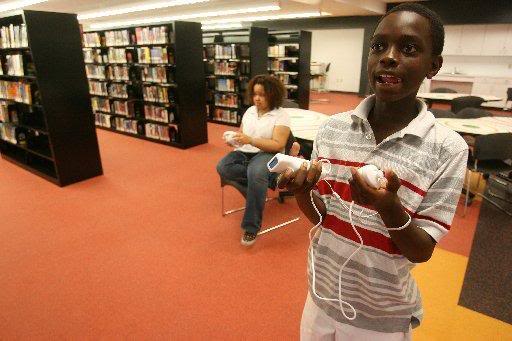
Most obviously, the difference is in cultural attitudes. Books are a resource that everyone should be able to access unhindered by socioeconomic status or location. Even in a sluggish economy, I can’t imagine a publishing company trying to guilt people into buying new books rather than borrowing them. Such a statement would sound out of touch and insensitive.

I am aware that big differences exist between book and a game publishing. Games, similar to movies, have high-development costs that at the very least need to be recouped. Also, I can’t pretend for a moment that I have an intimate understanding of the numbers behind the games or books.

Still, I feel uneasy when a company tries to guilt or force me into only buying their goods new. If games are art, which I believe they are, then isn’t my legal purchase of a used game also in support of the industry? Books are art, and therefore, culturally important; so dissemination is more important than the financial bottom line. The message seems to be that developers merely create games in order to make money -- any cultural value is secondary.

Maybe I’m a hopeless romantic; I want to believe that games are more than just a commodity. Lately, that’s become more difficult.

 
15
RACHEL JAGIELSKI'S SPONSOR
Comments (32)
Robsavillo
August 31, 2010


Great article, and I really like that you touch on the cultural importance of video games. Sometimes we lose sight that culture -- in many ways -- belongs to us all. I feel that when publishers wall off content with technological locks, we lose that connection to culture in the process, and I'm saddened that so many players are willing to hand over the keys.


Me
August 31, 2010


I think developers should stop complaining about the use game market and embrace it, like car companies. Many car companies not only sell new cars, but offer certified pre-owned cars, for those we can not afford to buy new ones. 


Dscn0568_-_copy
August 31, 2010


The big difference between buying used games and borrowing from the library is that a game store is a for-profit enterprise and most libraries aren't. Also, a library will get a handful of books at best for its entire reading area, might not get copies until a while after the original release, and you have to return the book within a set period of time.The book industry is as much a business as video games and movies are, and I'm not saying people shouldn't buy used games, but borrowing a book for two weeks does not have the same impact as buying a used game a week or two after it's released.    


Robsavillo
August 31, 2010


Why, Chris? You haven't convinced me. In both cases, used-game critics would argue that a new purchase has been lost.


Dscn0568_-_copy
August 31, 2010


That might be true. I could always bring up the "someone might read it, become a fan, and buy it later" reasoning but, that's argument has lost its value thanks to game and comic piraters. I could also say libraries are closer to Blockbuster or redbox than Gamestop but that's dodging the question. Rachel is right that libraries are viewed differently from game stores by the public though.


The core of this issue is that the method of buying new games and the method of buying old games is one and the same.  Libraries are public institutions that are used both to catalog information and keep older titles as well as let people read the latest Stephen King novel.  Librarians aren't trained to ask patrons to donate their latest books for 20% extra trade-in credit. You also never see Barnes & Noble or Borders sell used books at all. Games companies aren't upset at the act of buying used games, but at the fact that retailers have taken a system once reserved for pawnshops and mom-and-pop stores and turned it into their main selling strategy.


That may still be dodging the question though. 


Robsavillo
August 31, 2010


Yeah, I think it is.


But more importantly, by capitalizing on this revenue stream, we have a dedicated hobby shop in seemingly every corner of the U.S. That increases not only access to games (new ones, too!) but the industry's public profile. I think these ancillary effects (in addition to your hypothetical that a used buyer can become hooked on a particular game and purchase subsequent versions brand new) as positives for developers and publishers.


Default_picture
September 01, 2010


I'm going to try and be respectful in my following comments:  You are extremely misguided.


The library is a public service provided to those who cannot get reading materials and to promote literacy, reading, and general good mental health.  I never paid for a library card, I never paid to check out a library book or video (unless late, of course), and I never once bought a library book for 95% of its value when someone was given 15-20% of its value.  If you had made the point of renting videogames, maybe, but even then you would have to go into Blackbuster paying for EACH copy of the game (typically not at a discout) and then the fee you pay could be called licensing for a limited period of time.  Let's say I buy a book and decide I don't want it anymore.  I do not take said book to the library, sell it for an incredibly low price, and then the library turn around and sell said book for nearly retail and make 100% proft.  If that happens at your libraries, I am terribly sorry. 


Of course I am railing at Gamestop/Gamecrazy/etc more than the "mom and pop" shops, but the theory is stil there.  The developer/publisher has made money one time and said company has made money an endless amount of times.  I personally have no problem buying used as if I cannot find a game that is no longer in print I will sometimes go that route, but few and far in between.  I also do not have a problem with people who complain about buying used, as the used game industry is completely different from other used media outlets.  I don't think it should be banned, but I think both sides need to stop sound so elitist about the whole thing. 


The used industry has 0% to do with the library.  That statement is near hyperbolic, through and through, if not misguided.  When the library starts selling used games at 95% of retail value and giving 15-20% of value, at launch, then we'll see if this has become relevant at all.


N712711743_851007_3478
September 01, 2010


I like your thought process on the subject, Rachel!


I went on a mini-rant via Twitter yesterday about used games, and as Chris alluded to, I think publishers make a big stink simply because chains like GameStop (and apparently now everyone else) make the lions share of their money off of used sales.  If second hand gaming was still in the recesses of pawns and mom n' pops; this arguement wouldn't even be happening.


But that's neither here nor there; I just wanted to get that off my chest before I delved into what you're getting at: the guilt that's associated (or implied by publishers) with buying used. 


I'm in a funny position; my brother works for a developer, but I'm also raising 3 boys and have all those familial obligations.  For the most part, I buy new.  Only, I wait a few months until the price drops most of the time.  I'll be enjoying Mass Effect 2 for $30 today just as much as other people did for $60 in January.  And sometimes, I buy used.  Some deals can't be beat, and sometimes I just don't have the cash flow to buy it new. 


I can understand why publishers want us to buy new products; they spend a lot of money and they need to recoup the costs.  And I don't hate them for trying to incentivize things like online play to lure us in.  But I also know that everything else in the world has a secondary market, and gaming is no different.


September 01, 2010


I see used games as a form of legalised piracy I have no problem with. 

I think its great that if I can't afford to buy the latest and greatest I can if I just wait a few months and here in the UK, depending on the quality/desirability of the game its sometimes a matter of weeks. What does annoy me is that in-store I'm frequently moved away from new titles by the sales people and offered a used game for only a few pounds less than full-retail price which ofcourse they then pocket. But the very fact that loads of us still turn up at an actual brick and mortar store is an argument for used sales. When I lived in Spain, where last year's games are still sold at full-price, I learned that most people I knew had chipped 360s. Same when I was in South America: the high prices at stores there drives people to copying games more than when they can get it over the counter cheap. Perhaps the real problem is the attitude that every used/torrented game/song/comic is somehow a missed sales opportunity for their respective industries. I don't believe that. 


You raise an interesting point  with cultural perception of the value of reading and playing games. Perhaps once we have a bigger canon of must-play games then a more prominent space for games in libraries will be earned. Once society sees the ability to play particular classics as essential as playing hide n' seek to growing up. Who knows, by then maybe your gamerscore can land you a scholarship..  


Jason_wilson
September 01, 2010


@Steven If you pay any local taxes -- be it property tax on a home, rent that includes property tax, or local sales tax -- you're paying for your local library. 


The used-game debate continues to come back to one point, in my eyes: You are the consumer, and it's your right to determine how you spend your money; the game developers own the product, and it's their right to determine what to do with the product when they release it (and if that includes making a product more "attractive" new vs. used, that's their right). Speak with your wallet, people: If you don't approve of GameStop, don't buy from GameStop. If you don't approve of a company's approach to news vs. used or DRM, don't buy that company's games (or in the new vs. used debate, buy used). Consumers often feel like they have no say, yet they have the dollars, so really, they do have power. They're just too unorganized, as a collective, to wield it. (Maybe it's time for a video-game consumers association or something along those lines.)


Back to libraries -- my local library is great. I get books every two or three weeks. I purchase books during the "Friends of the Library" sales. I donate books of my own for the collection. I take part in discussions. When I have time, I help teach people how to read or read to children or the elderly. The library is a powerful tool for literacy, education, and social welfare. Please support your local library.  


Jason_wilson
September 01, 2010


@Chris "I could always bring up the 'someone might read it, become a fan, and buy it later' reasoning."


This happens with me frequently -- especially with nonfiction I deem worthy of my bookcase at home, as something that might enrich me on further readings. Same happens with serial fiction -- I got George R.R. Martin's "A Game of Thrones" and ended up buying it and the series to date. When I used to rent games from my local mom-and-pop game store, if I liked the game, I would buy it (rental fees would come off the top of the price, so I wasn't spending anything extra). 


Me
September 01, 2010


Great article, Rachel. Cracking stuff!


Although, just for clarity, I'd like to bring up my informed knowledge on borrowing, sharing and resale of books. Most of my University tutors are published authors, and some of my friends are now (or soon to be) published authors, and it's looking good for me too in the long run (published in less than two years, I hope), and whilst it's rather horrible for us all to think of people sharing our books -- months of hard work holed up doing nothing but write our labour of love -- for nothing, I actually know of a few who encourage people to pass legitimate copies of books around, if only because it grows the fanbase of said author. If I'm published, I know I'll encourage it people to pass my work around.


Of course, not all authors like this. Some absolutely loathe people re-selling their stuff, but I haven't met any of them personally. I think, in general, they're the ones who write the bestsellers and already have a massive fanbase, so a re-sold book can be considered a lost sale.


It also goes without saying that book publishers HATE the practise, understandably.


Authors also generally get paid thousands in advance, and unless it's a bestseller, their book wont sell enough copies for their publisher to warrant giving them any more (for that specific title, at least), so book sharing has a relatively low impact in the short term, but in the long term builds up a fan base who will buy their latest book in bigger numbers. As a consequence, the author or their agent can demand a higher advance for their next novel.


Of course, games don't have that luxury, as publishers are putting out multiple titles each year, some complete trash, and others excellent, so it's hard for a publisher to earn a reputation of consistently high quality, but I'd like to think the same principle applies to franchises. If the first in a series gets passed around a lot, whether that's shared, rented or re-sold, a fanbase will be built that will lead to increased new sales on the sequel.


As a principle, I generally buy a game new because I like to support the industry, but I also sell games which I feel weren't worth the £40 I paid for them. Of course, this money goes back into the industry when I buy a new game, and maybe the person who bought my game will enjoy it more than I did, and pick up the sequel new in the future.


In short, the resale of games is vital, both to games as culture, and to sustain and build fanbases. The short-termist greedy stance that publishers are taking will hurt them in the long run.


Img_20100902_162803
September 01, 2010
I have few thoughts on this dilemma as well, but almost all of them are covered. Except one, buying games that were released years ago "new" is a difficult task. And if they are release via digital distribution, there is a high markup. Don't believe me? Check MS Games on demand and try to find any of the 09 titles new in store. None, but used at gamestop or eBay? Tons.
Jamespic4
September 01, 2010


The Philadelphia Public Library and my university library both loan films and music. It doesn't seem like that much of a reach to think that games might one day reach a level of esteem where libraries carry copies of certain exemplary titles, too. What then? Should we buy new instead of getting games from the library?


Honestly, I'm about done with this argument. I'm experiencing a fundamental disconnect here where I don't understand why this is even a topic for debate. I simply cannot understand why some gamers are clamoring so fervently to give away their rights as consumers. In the past, people fought really hard to stop patenting and copyrighting from extending indefinitely into the future and to ensure that first-sale doctrine protected consumers from the purposed domination of coporations.


We really need some kind of Ralph Nader of video games to step in here and start calling bullshit on this corporate propaganda that actually has people feeling guilty about making educated purchases that benefit them as consumers.


Jayhenningsen
September 01, 2010


James - Some libraries are already experimenting with loaning video games. I know this because my wife is a librarian. 


I have a disconnect on this issue as well, but for different reasons. I don't really care what Gamestop or the publishers do because I generally just wait a few months before I buy video games, so I both get them new AND I get them far cheaper than what Gamestop sells used copies for when the title is current.


It seems incongruous to me to expect everyone to argue for their rights as a consumer but, at the same time, not to expect them to actually be smart consumers. The vast majority of the time, making the choice to buy a game used at Gamestop is not educated or beneficial when there are better, cheaper alternatives that require naught but a little price-checking and patience.


Robsavillo
September 01, 2010


Jay, publishers' assault on used games is not limited to GameStop. A used game from Amazon is similarly crippled by THQ's policy. I think we need to move this debate beyond gripes (however justified) with GameStop.


Default_picture
September 01, 2010


I am but a simple gamer who is a bonafied 9-5er, holding it down on the cash register at a grocery store. A person like me doesn't have a lot of time to engross myself in politics like the shit at hand here. We work hard; a 1/3 of our day is gone and people like me try to make up for lost time by filling it up with as much game time as our social life allows.


That said, I'm a working stiff who believes in actually buying games from a legitimate retailer. But games cost a lot of goddamn money nowadays. I don't see myself dropping $59.99 for Heavy Rain, a game of unrewarding theatrics, if I can find it much cheaper at another retailer. I have no problem going to Disc Replay and purchasing it for half the cost (actually I'm lying. I'm pissed I bought that crappy game at all). I never knew there was such a guilt trip being laid out from publishers over used game purchases. Talk about selfish and a waste of time.


For the few articles I read about the damning of used games I have to say this is completely ludicrous and a huge waste of time to even debate upon (and to even try and compare piracy to this is fucking bananas). I’m saying this because it shouldn’t be an issue at all. Publishers, you got your money once the retailers bought whatever # of units of your product. Fuck off with this greedy attitude. Devote less time in being a spiteful, greedy lobbyist and more time in giving the green light for the release of good games. If any gamer sides with the publisher's assault on used games then you sir/madam are a complete asshole and aren’t fit for gaming society.


/rant


Dscn0568_-_copy
September 01, 2010


@Rob it's true that this goes beyond GameStop, but I think the debate focuses on it because it's the most visible example and it was the company that proved the practice was viable in the first place.


@James I used to volunteer for a local library too, so kudos to your efforts. Like I wrote above I didn't want to use that argument because it's so often used by people who illegally download games or read scanlations of Japanese comics. You can't measure how many people who pirate these things buy the actual product, and there's little reason to since you can access it at any time. At least at the library there are informal restrictions to borrowing like availability, holds, etc.


Scott_pilgrim_avatar
September 01, 2010


@ Rob: I'm starting to think that someone could write an article on any subject and as long as Demon's Souls is mentioned somewhere in the body, you would post it to the front page, haha! I jest! I dig on the Demon's Souls love!


Great read, Rachel! I'm also interested in where the naysayers of used game sellers would stand on the growing trend of libraries loaning games. Even within my lifetime, it was first considered outrageous for a library to loan out any movie that wasn't a PBS special, and now it's commonplace to find even new releases. Arguably, for libraries to stay relevent, they'll continue to embrace new media like video games in the coming years. I dream of the day when some starry-eyed kid can walk into a library and check out The Adventures of Huckleberry Finn and The Legend of Zelda, haha!


Default_picture
September 01, 2010


I don't think there is a cultural difference here between going to the library or buying used at gamestop. It's just buying vs. borrowing.


Gamestop - you buy used games and effectively own from that point on to do whatever you wish, even resell back to them. Library - you are just borrowing for a little while, just like as if you are borrowing from a friend or another family member. You don't own it now, Can't resell it. I doubt the author feels guilty when borrowing a game from someone.


I've bought mostly new titles for my DS and mostly used titles for my PS3. Why? Money, obviously. The only time I go out of my way to buy New is when it comes to games that I really want right away or I have no choice like Starcraft 2. Other than that, I'll just wait for used.


Make the games cheaper and I'll buy more new copies. Make the games cheaper and Gamestop used prices won't look so attractive.


It's a highly competitve market that is constantly oversaturated. This month's big title is soon to be outshadowed by next month's or even next week's big release. The secondary market has been around for over a decade and isn't going anywhere soon. There is so much more competition considering other game developers too when compared to a decade ago. They are just gonna have to adapt if they want to survive.


Robsavillo
September 01, 2010


Ben, it's not my doing that most articles to mention Demon's Souls in some capacity are also well written and insightful!


Comicemblemlarge
September 01, 2010


I don't believe games are inherently art, just as I do not believe that a book is inherently art, or paint on a canvas is inherently art.


That said, I think Rich M. said it best a few comments ago that in a library, you're BORROWING.  These books/what have you are typically also donations, meaning they didn't pay for them, but someone gave to them free of cost.


Buying a used game supports businesses who do not mind marking things up 200%.  I don't usually find a used game cheaper than 5-10 dollars unless it's particularly old.  You could probably find a better quality game for less on ebay or some other place, in which you're paying someone more what it is worth and getting a better deal yourself.


Scott_pilgrim_avatar
September 01, 2010


Rob, this obviously says something about how brilliant Demon's Souls' fans are!


Default_picture
September 02, 2010


Fundamentally what we are seeing here is the growing pains of an industry that is shedding an old model of business. These thoughts arose from the fact that now some developers and publishers have the ability to sell a game (digital distribution) for what it always was, a licence to run their copyrighted software on your machine.


We have been buying games on a physical medium for so long now that many of us have forgotten what it is we really pay for when we buy a game. Games have come on floppy disks, cartridges, CD's and DVD's over the years because it was the only realistic way to deliver the game to the consumer. It was not a choice of the publisher, but a necessity of the technology.


Along comes digital distribution and people start thinking. Hrmm I can't give this game to my friend now when I'm done, hrm I can't trade it back in when I am finished with it. Hrm I can't buy a cheap used copy instead of a regular priced one.


Then we start thinking how the economics of the industry works. Retailers sell a used game and the developer doesn't get a cut. Some people allude to how this is no better than piracy and that gets everyone thinking.


That this can even occur legally is due to what is called the first sale doctrine in the US, other countries like mine (Australia) call it the Exhaustion Doctrine. In simple terms it gives the buyer the legal right (which they normally wouldn't have if this law did not exist) to transfer their "licence" of the copyrighted work to another person. Its different to copying software because you are exhausting your original claim to the licence (i.e. I give you my apple, now I have no apple). I doubt the lack of this law would stop people reselling anyway, and its probably for that reason that the law exists in the first place; to protect a culturally accepted behaviour. We have always traded and bartered since before we had currency, it is socially ingrained. Why waste something that someone else could use and I could receive back from? But we think this way because we are use to thinking in terms of physical goods and not software (copyright, a legal construct we created).


The important thing to remember is that games are software licences and they always have been. When you buy them you do not own anything but the medium on which they are stored, and the medium is meaningless to us, we care only for the information stored on the disc. We are dealing with something fundamentally different to apples and oranges and tangible goods of our past.


As we move into the future and embrace digital distribution the used game market will slowly dissolve over time and this will be a non issue. Game licences that we have always been buying will become like the publisher's always wanted them to be, non transferable. further more there might be a push towards subscription models of business in all game types, not just mmo's. Is this a good thing or a bad thing?


I don't think it is either. Good and bad things will come of it, and we have already seen some of them (publishers charging full retail price for a digital distributed version etc). The point is, we should probably ask ourselves, how do we think video games should be sold?


Two interesting questions I can think of are,


Why do we want to resell a videogame? What are we saying when we do this? I think we are saying that we want to pay less for this game. If you think about it, your selling the game back and getting some return, which reduces the overall cost of the game you paid for. That people trade in so many games is in my mind a message to the developers that the price is too high. Many people don't want to pay a high price and keep a game forever.


Why do we buy used games? It's certainly not for the quality. It's because they are cheaper and in all likelyhood work just as well. Again the message here is clear to me, we want to pay less for games.


Libraries aren't illegal for the same reason trading your used game cd isn't. The right to do it is something we value as a society, as part of our culture, to freely trade physical goods with one another. Libraries in ages past were bastions of knowledge and cultural growth. We respect the need for this right to exist. In some sense it is alien to us for it to be any other way. On those grounds at the least it will always remain a right.


Now how do things change when we think of books and libraries in terms of the kindle (or any other e-reader)? Do we think it should be fair to resell our purchased e-books? What do we think of the idea of a library of e-books that can be accessed from your e-reader?


What I am trying to get at and reveal here is the fundamental skeleton of what purchasing a videogame means. And what it really comes down to is the human created constructs of copyright law and intellectual property. We live in a society that believes ideas can be owned and sold/licenced/etc but we also live in a society that has evolved from a history and behaviour of bartering. At the moment these two ideas are in some conflict. But like I said, ultimately digital distribution will make it clear some day in the future to all of us exactly what it is we are paying for. And then when the only option is to accept the terms of the creator's copyright we might start to wonder how much of intellectual property laws we actually like.

Robsavillo
September 02, 2010


Roy, copyright law does not protect ideas -- that is a fundamental misunderstanding that a lot of people seem to have. Copyright law protects expressions. Copyright is bargain between the public and creators, and it is explicit in who it favors:


To promote the Progress of Science and useful Arts, by securing for limited Times to Authors and Inventors the exclusive Right to their respective Writings and Discoveries.


Copyright's purpose is to encourage new works for the purpose of advancing the "progress of science and useful arts" and does this by providing creators the exclusive right to make copies for a limited period of time. When that time expires, those works enter the public domain for the benefit of society and culture as a whole. Copyright law favors the public.


Furthermore, when we purchase copyrighted works, we are not purchasing "licenses." The software industry is trying to push everything to be a license by merely calling their products licenses, even though we still make one-time purchases for the software. U.S. courts are divided over this issue.


You're right that technology is part of this discussion -- many of our consumer rights are based on the limitations of physical products. The switch to digital allows creators to circumvent those rights for their own benefit and at the expense of the public. The Internet provides creators unprecedented control over their works, too. Lawrence Lessig argues in Code 2.0 that we risk allowing creators to wall us off from our culture through technological locks.


As a consumer, I'll argue for our existing rights to be extended toward digital products as well. Creators have the means to take away those rights as they exist in law now -- and we see that happening. Steam doesn't allow users to resell, lend, or giveaway games to another user.


OnLive is looking like a future where you'll never own another product again. It's what Lessig called the content jukebox. OnLive requires you to purchase games for full price and to pay a subscription fee for continued access to those games. If you cancel your sub, you lose everything.


That's not a future I want.


September 02, 2010
@robsavillo that is a very good point you clarify bout the difference between copyright and licences
Isn't there a time limit on copyrights, like 30 years ? imagine if the code to games would become available to all online
30 years after release.. That could seriously speed up development of games in the future.. Nevermind giving the indie community the ultimate modding tools
Robsavillo
September 02, 2010


Unfortunately, Yann, the current copyright term length for most works in the U.S. is life of the author plus 70 years. Originally, the term length was 14 years (which could be renewed for an additional 14 years by the original author only).


The incredibly long term length for copyright today means that the positives you describe will (generally) never happen in our lifetimes (unless the author unilaterally decides to hand out the source code, like id Software routinely does).


Default_picture
September 02, 2010


I'm in no hurry for digital distribution only. And it doesn't look like it's taking off well (excluding the PC market, I'm just talking consoles) if you consider the PSP Go's lack of success and Sony's decision to re-add the UMD drive on the future PSP models. It really says alot when a major PSP title (Kingdom Hearts: Birth by Sleep) has no plans to make their game available on the PS Network, meaning it's not coming to the PSP Go at all which is odd. This may speak volumes on Sony's way of handling any fees to the publisher for digitalyl distributed releases though.


The secondary market wouldn't be around if there was no value in used games. Look at the DVD industry. DVD sales skyrocketed when your typical DVD lowered in price. Buying used wasn't as desirable and it even made renting not as flat out easy a choice until redbox came along. Of course the movie industry has a release policy in place where titles aren't available for several months after theatre release which gives them ample time to rake in their most profitable sales (theatre tickets). Efforts could have been made to put similar measures in place but it's too late and obvious now.

September 03, 2010


@RobSavillo right.. that would explain the "Family Trust" thing in music.. we wouldn't want to rob Elvis' great-great-grand kids from the alleged 300 million the King still rakes in annually. 


Default_picture
September 03, 2010


@RobSavillo


I do not think I said anywhere that copyright protects ideas. I did however say that we live in a society that believes ideas can be owned and licensed. By that I was referring to the entire collection of intellectual property laws that have been created, which includes patents for example, and patents do indeed protect ideas.


Also I did not say that the purchase of all copyrighted material is the purchase of a licence. I said computer games are software licences. There are licences for other types of things as well. For example e-book titles typically have licences akin to computer games. Licences like this exist for a few reasons (some of which I agree simply give power to the creator) but probably the most interesting and primary reason is simply to avoid a silly legal situation of having your customers break the copyright laws to use your product.


When you install a game from a CD you are making a copy of it (on your hard drive) and infringing on the software creator's copyright. The licence exists as a way around this. If you agree to the licence the creator allows you to make a copy on your hard drive and use it under certain terms outlined.


Now people start using books for comparison and analogies, but you have to understand the differences with books. A book has no need for a licence. When you are sold a book you receive both the copyrighted information, the medium of storage AND the device in which to access the information all in one neat package. The act of reading a book does not make any copies of the copyrighted material.


I am really confused about your desire to argue for existing rights of tangible copyright storage mediums to be transferred across to the digital realm as well. You mention steam. Why is it that you want to resell your purchased steam game? And furthermore who do you want to resell it to? do you mean just other users? Or do you want to resell it back to the creator? Either way you are basically just asking for some money back after playing it for X amount of time. Really this just translates to a rental model. The only reason I can think of for wanting to resell a digital licensed game is because fundamentally you disagree with the cost/value of the transaction. Bored of the game after a week, realised six months later you don't play it anymore etc. You want some money back. Really your saying you wished you paid less.


Issues of the cost of games should not be solved which such complex second markets. If the problem is that the game is too expensive then the game should be cheaper. Isn't it better for all concerned to sell a game cheaper to all than to sell it full price to some, and let a second market make it cheaper for others?


Consider a game which sells for $50. Two customers want the game.


Option 1: Fred buys game for $50, plays it, then sells it to Bill for $25. Creator makes $50, Fred and Bill both spend $25. Consequently both Fred and bill are at a loss but not of the monetary kind. Fred is now without the game and Bill had to wait before playing the game.


Option 2: Company sells game at $25. Fred and Bill both buy a copy. Company makes $50 from two sales and both Fred and Bill spend $25. However this option has many benefits over the former. Both Fred and Bill got to play the game straight away and they can both play it for however long they want.


Now you can run the numbers in different ways, but ultimately it will always come down to one thing. When people trade in their games it is a sign they do not see value in that game anymore. They have decided it's only value to them now is to get some money back. If this is the case (that trading is so prevalent), then it is a sign that the pricing model of many games needs to be reconsidered.


Before digital distribution we thought of games as physical objects that we could own, because for all realistic purposes they were! They were stuck on physical storage mediums which could be swapped and held by different people. Now in digital distribution, stripped of it's storage medium we see a game for what it really is, pure copyrighted material. Now if we have a problem with how that is licensed to us, then really what we have a problem with is the copyright system itself. And that is a fair enough gripe to have considering it hasn't changed much since the advent of the digital realm.


Robsavillo
September 03, 2010


Roy, sorry that I misread your previous comment! Thanks for the clarification. One point on software licenses -- like I said, courts are divided on this issue. EULAs and licenses don't always stand up in court, especially when first-sale doctrine rights are circumvented (which is exactly what the used-game debate is about). See SoftMan Products Co. v. Adobe Systems Inc.


I'm not sure I understand how transfer of ownership is identical to a rental model. If i purchase X, then I should have the right to sell X for whatever amount I want, to whomever I want (sure, the original author can purchase it back!), and whenever I want. I should have the right to lend X or give X away to a friend. And I don't think digital products should be any different.


The reason this is an issue is because these first-sale rights were easily enforced through the physical limitations of our products. But digital products that are connected to a world-wide network (i.e., the Internet) allow unprecedented control for creators to exercise over the products we purchase. I'm not alone, either. This is why DRM is such a huge issue in all forms of entertainment.


Another thing we need to consider is that products going fully digital won't magically reduce the price of goods. I feel that video-game publishers won't lower the price of games if and when the product is no longer offered in physical form. Millions of gamers have accepted the $60 price point, and millions more have accepted $15 DLC map packs -- content that was previously user- and creator-generated and offered for free.


Essentially, I don't know why any company would reduce triple-A games by 50% in a digital only environment, which is why I think your option 2 isn't plausible. On the other hand, by retaining our consumer rights and a healthy secondhand market, we'll still have the lower cost option for those who can't or won't pay full price.


Default_picture
September 03, 2010


I kinda agree with you that option 2 is not plausible. In fact we can even see the exact opposite happening right now, what with publishers charging the exact same price of a physical game copy on steam and in some cases there have been reports of steam versions costing more than retail box versions which I think we can both agree is absurd.


However I see option 2 as more plausible than the possibility that tangible consumer rights will pass over to digital licences. It's not going to happen. There will not be a second hand market in the digital realm.


Option 2 was mostly just to highlight the logical solution to this problem, which is basically a monetary issue. Gamers want cheaper games, creators want more sales. I do not propose that it could be brought about quickly by a decision on the part of either side. Rather this is something that could happen through market forces over time, since we vote with our purchases. For me personally that often involves buying games when they go on sale. I really don't consider the latest fps shooter single player campaign which I finish in 10-20 hours to be worth the full price they charge nowadays. So I wait and buy when it's cheaper.


When I talk about preowned as a quasi form of rental I am trying to highlight the underlying motivations we have for our economic behaviours here. For example, why do we bother trading games in at all? Why did you decide that you do not want to "own" this game anymore? I feel that the answer is that we want to get some money back, and I feel the answer is important because it reveals a widely held attitude that most games are not worth their cost for the length of entertainment they provide. I think many gamers subconsciously do not want to pay a big premium to "own" a game forever, especially when they realise how quickly it gets regulated to the shelf. If we try and model our experiences with buying new and trading in, I see it as something like this,


"I played this game but I won't play it again so I want some money back because I don't think the full cost I paid for it is worth the time I have spent on it." A customer buys a game at $60. Plays game for 1 month. Trades game in for $30. End result, customer spent $30 to play that game for 1 month. What it all boils down to is paying X COST for Y LENGTH of play time. In my mind all market experiences with games and customers can be thought of in these terms, and these terms are analogous to a rental system. Even if you buy a game and keep it forever, never trading it in, Y is simply a very long time.


What we see when lots of preowned trading occurs is really very similar to a rental system. I used to manage an EB game's store and I remember the regular customers and their habits. Gamers would rock up on launch buy the full priced game. 2-4 weeks later they return saying they finished it, they then trade it in and get the next newest big game to come out, the cost of the previous game subsidising their next purchase, and so on and so on.


Thats what I mean when I say rental system. I think it's important to notice, that there are so many gamers (as evidenced by the popularity of trade in's and mmo subscriptions) that are revealing what they really care about in their gaming hobby; cost vs entertainment value. And my whole point is that this desire in gamers is being handled very messily at the moment, with the parallel used market. Some gamers benefit if they are the kinda people that trade in at the right times, other times you lose out. The whole point really is that it sucks that these games are set at such high prices right off that bat that we as gamers are forced to make use of parallel markets to recuperate costs in the first place.


I understand that it's unlikely publishers will lower prices, but really voting with your purchases is all you can do. Digital distribution will take over and it will be licenced and we will be at the mercy of the creator. But we should remember that at the end of the day they need our money to survive and we will always have that to vote with. There are many smaller developers that are making some interesting stuff on digital distribution platforms and by supporting them and their lower costed games as well as waiting for games to drop in price we are sending a healthy message to publishers that over time might be enough to break them out of the blockbuster big budget full priced games mentality.


You must log in to post a comment. Please register or Connect with Facebook if you do not have an account yet.