Home
Home
 This is the second entry in my series of posts about my experiences with video-game worlds. For some background, check out the introduction.
I want to start this entry in Not Just Another World by giving some credit where credit is due. If, in my desperate dig for ideas, I hadn’t remembered Doug Otto’s recent Bitmob post on the post-apocalyptic wasteland in games, I probably wouldn’t have overcome my writer’s block for this post.
The term “wasteland” gets used all-too often in reference to games that take place in a post-apocalyptic setting. I’m not saying that it gets used incorrectly; certainly, scorched earth and radioactive atmosphere constitute a wasteland. But not every post-apocalyptic world is a wasteland and, likewise, not every wasteland is what it seems.
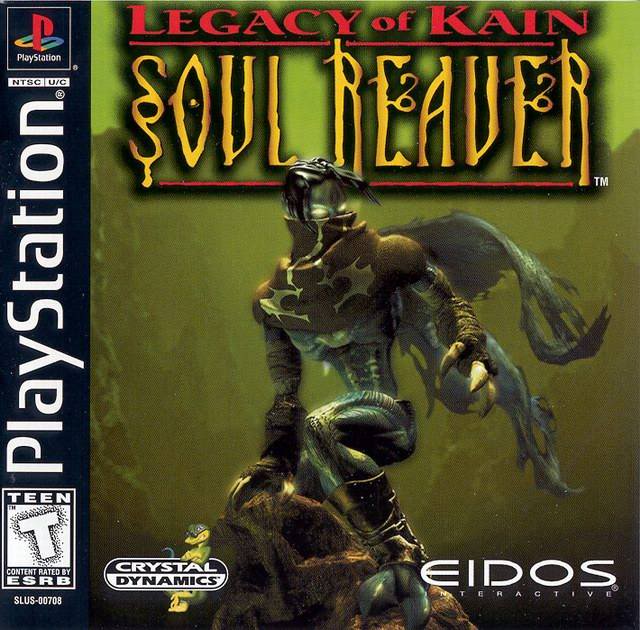
For such worlds I’ve created a new (as far as I’m aware, at least) term: Apocalyptia is a world that is at an end, whether that’s the end of the world or merely the end of a cycle. Upon concocting this term, two games jumped into my mind: The Legacy of Kain: Soul Reaver and The Legend of Zelda: The Wind Waker.
At first sight, Soul Reaver’s Nosgoth is a wasteland if ever there were one. Nosgoth was already once-ruined by an empire of six vampire clans and now exists in a state of decay since the arrogant rule of its self-styled god-king, the vampire Kain, led it to destruction a second time. The dead Earth, cold and dry under scorched skies of smog that block out the sun’s vital rays, host the remains of human civilization, themselves the foundation of what remains of Kain’s fallen empire.
The six clans have devolved into monstrous savages. The Razielim clan are extinct, the target of genocide following protagonist Raziel’s perceived betrayal of Kain. The Turelim and Dumahim, having lost their leaders, are nomadic predators. Futilely, they roam Nosgoth, preying on the scraps of humanity and prolonging their own extinction. The cynical Melchahim have accepted their fate and steadily fall victim to their own undead decay. But, peculiarly, the Zephonim and, to a lesser extent, the aquatic Rahabim clans seem to be thriving.
Walking, as the vengeance-minded Raziel, through the halls of the vampire Zephon’s cathedral, I couldn’t help but notice just how the clan leader’s arachnoid progeny have adapted to the wasteland. They’ve turned the entire cathedral into a trap of webs; they keep human prey cocooned for long-term storage and they’ve attracted a vampire-worshiping cult, ensuring a steady supply of humans for feeding and, I assume, procreation. And, finally, emerging in Zephon’s chamber to confront his massive form, I defeat him by lighting his eggs on fire and throwing them back in his face.
Wait a second . . . eggs?
The Zephonim have evolved into arthropods, arguably the most survivable species around. More than that, they’ve learned to adapt intelligently; their evolution is leading them to procreate naturally and, in the meantime, they’ve ensured a steady supply of food and new vampires with their “pet” humans. What we’re seeing in Soul Reaver’s Nosgoth isn’t the end of the world, it’s the end of a cycle; we’re seeing Darwin’s theory in action. Just as an apocalyptic event ended the reign of giant lizards and ushered in the rule of mammals, so is a similar event ending the superiority of humans and vampires and creating something completely new.
At least it was, until I lit Zephon on fire.