


 Editor's note: They say we're afraid of the unknown. Well, as we speak, scientists are attempting to identify that unknown element that soaks beds and soils underwear. Will horror games lose their appeal once we pin down fear to a mathematical formula? Corey investigates. -Omar
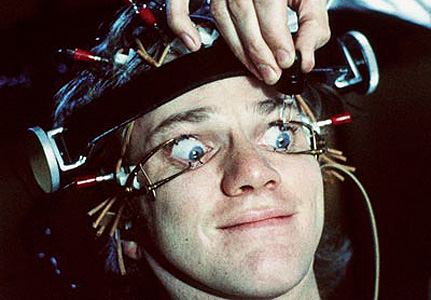
In my most recent issue of Popular Science was an article on neuro…something. I don’t remember the name and that isn’t important. What is important is what the article concerned. Scientists were hooking volunteers up to a machine and playing scenes from scary movies on a screen positioned inches away from their faces. Do you remember the scene from A Clockwork Orange with the restrained prisoner who had his eyes pulled open... well, it was like that. The only difference was the FMRI (functional magnetic resonance imaging) machine the researchers used.
The study observed the presence of a primal instinct in the brain. Experts compared the activity they detected in the brain with the subjects' physical responses. If a subject came back and claimed “I soiled myself, that was horrific” the researchers would expect to see relevant brain activity. If the subject wasn't terrified by the footage, the brain wouldn't light up and no unusual activity would be observed.
Why is any of this important? Allow me to explain...
Some Hollywood studios and directors commissioned the work of scientists responsible for studies like this. In essence, film directors use these experiments to determine what's scary and what isn't. The Hollywood execs involved claim that these scientific efforts will help them better understand what works in movies.
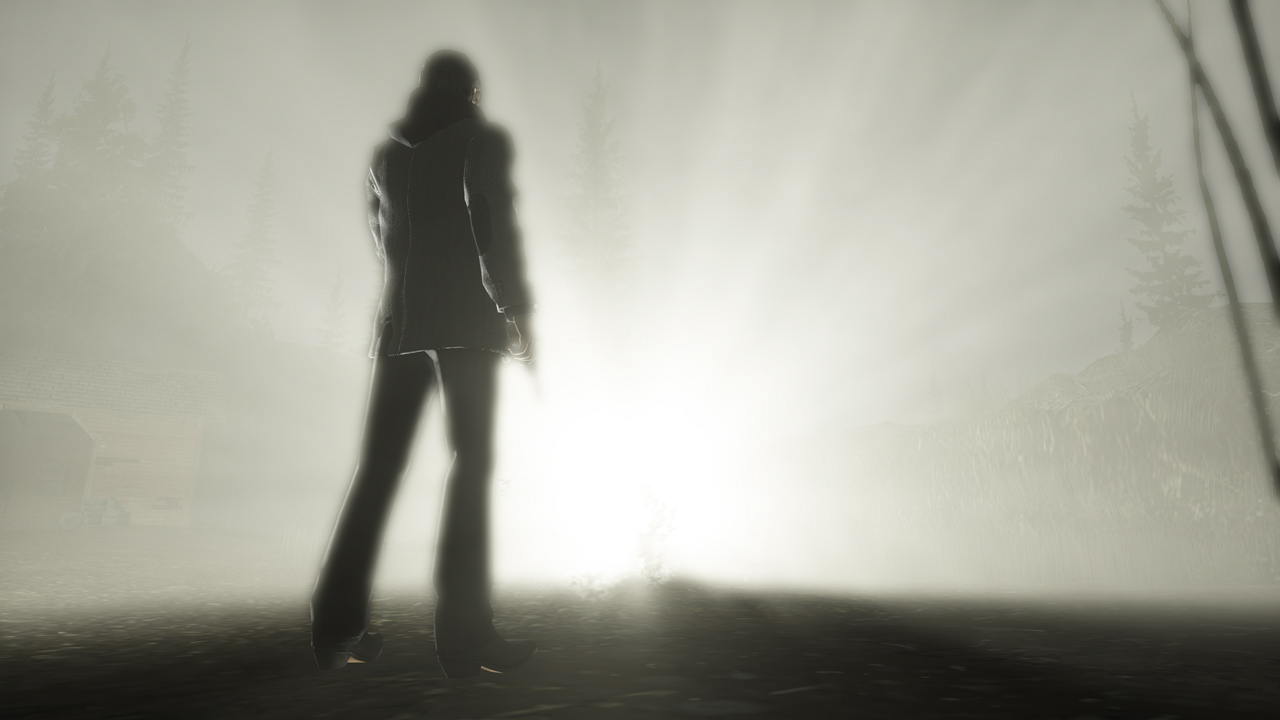
I have a few thoughts about this and I’d like to share. Firstly, should video game developers approach gameplay design with the same rigorous, scientific mentality? I recently finished playing Alan Wake. I was terrified the entire time, but I kept playing. Why? Because the story was compelling and I cared. Could a couple of guys with an FMRI machine change that? Could they figure out what my limit is? I’m pretty sure everyone has their own tolerances with respect to fear, drama, and anxiety.
 Is it possible to make a game (or any interactive experience) so horrifying that someone would stop playing? Indeed, I believe it is. Right now, I can think of no fewer than three things that would make me put a game down, none of which I have seen yet.
What do these kinds of studies tell us about the entertainment industry? Have we gotten used to seeing things that should frighten us and not batting an eyelash? Would having an experience custom tailored for you be a rewarding one? I’d be willing to give it a try. What do you think?