


The cultivation of three-dimensional technology has been going on since the 19th century and certainly seems like it has no intention of halting.
With the advent of 3D televisions, movies, and Nintendo's upcoming 3DS, it would probably be a good time to learn about what has already begun overtaking your movie theatres and will soon invade your homes.
The Beginning – Stereoscopic Images:
All technology has a starting point, and Charles Wheatstone first described 3D images as a re-creatable possibility as early as 1838. Stereopsis (from “stereo” meaning solid and “opsis” meaning sight) was described by the English inventor as “the mind’s perception of a three-dimensional object by means of two dissimilar pictures projected onto two retinæ”.
Essentially, it’s the illusion used to give two-dimensional pictures depth and disparity by tricking your eyes. A stereoscope – a unique type of spectacle – is required to actually view the trick correctly. The images used in order to induce stereopsis are typically called a “Stereo Pair”.
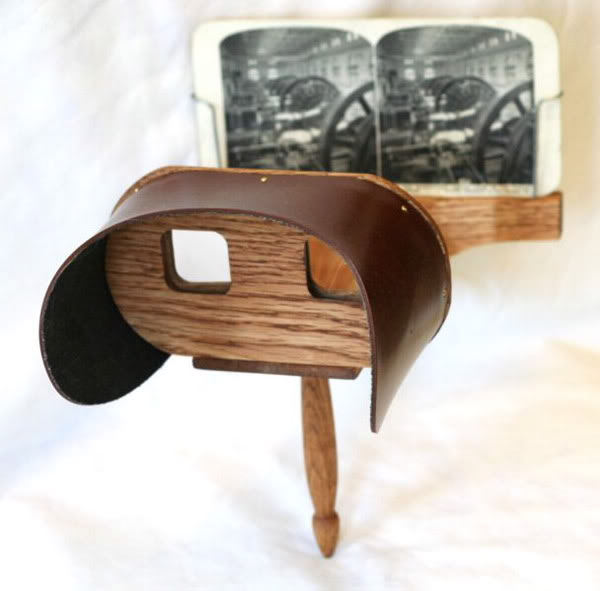
In the Victorian era, after David Brewster invented the prism stereoscope (the first consumer-grade stereoscopic spectacles) and photography became a popular hobby, viewing stereo pairs became a regular pastime and thousands of “Stereo Cards” (cards with Stereo Pairs on them) were created.
Today stereoscopic technology is still in place with Anaglyphs. Those funny glasses you paid an extra ten dollars for at the theater are a more modern version of the stereoscopes your great grandfather (and his great grandfather!) had. If you don’t mind a bit of a headache, the next time you go to see a movie lift the glasses up; that blurred, slightly off-color image is an anaglyph, which consists of an overlay of two different pictures that are used in conjunction with the glasses.
Each of the lenses in those glasses are polarized and meant to see one of the two images that appear on screen. There was a reason the older glasses were red and green or red and blue – the colors polarized your eyes to see the related picture onscreen that matched with those colors.
Before new anaglyphic technology came out, the two-color glasses were your best bet for having an image pop out at you. Now, the glasses actually take advantage of three colors in order to give you a clearer, more realistic image – while red is still the de-facto color for the left eye, cyan is now used for the right This not only gives you a clearer image but also more accurately portrays things like skin tone or the skyline.
Certainly we must have a better way by now other than these crappy, cheap glasses to see 3D, right?