Bitmob Community Jukebox No. 31 -- The Modern Soundtrack Edition

Jamespic4

The community-submitted tunes just keep on coming! It seems like every week the Jukebox's playlist becomes more and more eclectic, and I'm definitely a fan of this trend. Also, I want to take a second to thank everyone who takes the time to suggest a song each week. I'm grateful for your continued support.

For this edition, I've taken it upon myself to disprove the theory that newer video game music sucks -- every song I chose is a title I have played in the last two months.

The community section of this week's selections is a bit different: Its tunes are from all over the map. Pixel Revolt co-host Jeff Grubb throws in only the second song in Jukebox history from the Atari 2600 (hint: It's from a David Crane game that isn't Pitfall!). Bitmobber Jimmy Flores takes us back to the days when Metroid Prime was getting rave reviews, and Alex R. Cronk-Young keeps it current with a nostalgic track from Mega Man 10. Last -- and most certainly least -- some British guy named Alex Martin who follows me on Twitter donated a stinker from Amped 3. Thanks a lot, Alex -- and don't worry, we still love you!

Want to find out what the hell a Bitmob Community Jukebox is? All you have to do is hit the jump.

Read more >>

How I Game

Default_picture

Editor's note: We each have our own preparations for playing video games, and Toby is interested to know exactly how you ready yourself whenever you've got the itch. But I'd like to know which one of you has the most elaborate ritual. Well? -Rob


I always wonder how other people play video games. Where do they plop down? Do they eat or drink? How do they sit when playing Call of Duty online?

I have my own little process down pat, which includes several variations depending on the time of day or what game I'm playing.

Read more >>

Terrible Old Games You've Probably Never Heard Of: BMX Ninja

Default_picture

Stuart Ashen's obsession with horrifyingly awful old-PC games returns with a look at possibly the worst concept in existence. BMX Ninja is exactly as it sounds and was released back when the Commodore 64 was viable.

I'd really like to think that most game company executives are Daleks. Explains so much about Activision if you consider it. 

Read more >>

Hit or Miss Weekend Recap - Mar. 14, 2010

Default_picture

This week on Hit or Miss: Sony gets their PlayStation 3 Move on (that's one of about 78 "Move" puns out of the way, at least); Ubisoft's disastrous digital rights management failures unfortunately prove it's not paranoia if your worst fears come true; Super Street Fighter 4 sets a new bar in creepily awesome insanity; and 2K Games tries to defend an indefensible DLC scam. Unsurprisingly, they fail.
 
Read more >>

What if Mega Man Games Had Street Fighter Characters?

Default_picture

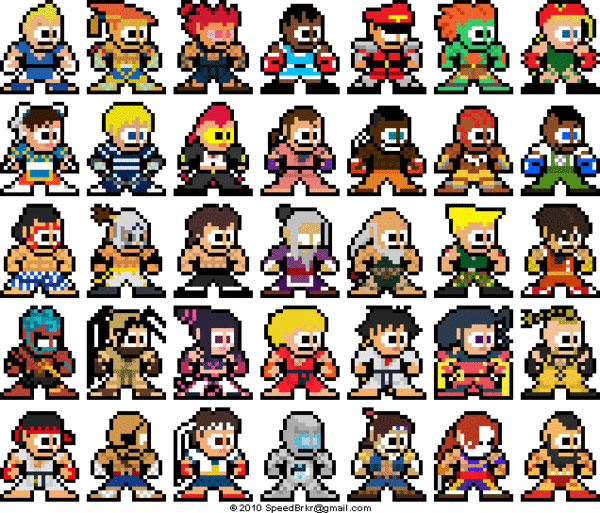
Out of all the possible Capcom crossovers, Mega Man and Street Fighter seem to be the least likely. But a pixel artist named SpeedBrkr disagrees. He put together artwork for every Street Fighter character -- transformed to fit into an 8-bit world.

If you go to his actual page, you can see that he also animated each character. Who knew that Akuma and Blanka could be so cute?

Read more >>

The Evil L Word: A Look at Linearity in Gaming

Default_picture

Editor's Note: Richard flexes his creative muscles here and tackles the topic of linear games from the perspective of a Roman Senator. I'm glad that this inventive piece found a home at Bitmob, and I'm interested to read what he comes up with next. - Jay


My fellow gamers, as the moon turns and the long foretold coming of the Thirteenth of the Fantasies Final draws nigh, one word has been spat like a curse across the realm. It is spoken of as the black death upon gaming's soul, festering away at all the good and leaving not but an untouchable rotted corpse. Like the word “witch,” the mere accusation spreads like wildfire and becomes truth amongst our community. And lo doth any hapless victim receive this title for they shall forever be burned within the flames and hatred of their once most faithful of supporters. Yet, I stand here today, in the Grand Hall of the Internet and surrounded by this most fickle of counsels, to defend this greatest of sins: Linearity.

At the birth of our kingdom, we were but a simple people, content to bounce our square balls and gather food from ghost-riddled caves. Yet, with time came complexity and with complexity, the birth of legends. Who here can forget the tales of the great Fixer-of-Pipes and his battles with the Reptile King? What child does not know of the adventures of the Blue Rodent and his Twin-Tailed companion? Do not forget my fellows, that even in that golden time, linearity was there. For both the Fixer-of-Pipes and the Blue Rodent could not move but right; forever right to victory. Lo! I hear you cry, “but what of the Hero of Hyrule and the Masked Hunter of Men?” Indeed, their legends can be told in many different ways. Yet, even their epics must be told in a certain order, lest they have not obtained the items with which to conquer their trials.

Read more >>

Overused Terms in Game Journalism: Emo Edition

Default_picture

Editor's note: People often bandy about a somewhat amorphous term to describe video game fans and characters: "emo." What does it mean? I make immediate connections with the origins of the term: mid-'80's post-punk emotional hardcore bands like Embrace and Rites of Spring. Brian makes connections between the supposed affectations of people who are "emo" and the lack of sensitivity this may indicate toward mental illnesses such as Major Depressive Disorder or Social Anxiety Disorder. Whatever the case, I'm in full agreement that this is a somewhat loose, very ineffectual way of describing something. -James


Disturbing trends in game journalism are nothing new, but one annoys me more than most others -- the increased use of the term "emo." Since the start of the new millennium, the term "emo" has infected pop culture faster than Swine Flu swept PAX '09. When used in everyday discussion, it's often associated with people who appear to be unhappy and wear dark-colored clothing.

One definition at Urban Dictionary describes "emo": "An entire subculture of people (usually angsty teens) with a fake personality." Whether or not such people exist is debatable, but the term "angst" is nothing to laugh at. According to Dictionary.com, "angst" is when a person has "a feeling of dread, anxiety, or anguish." Certainly, having a small amount of these feelings is normal, but when they overwhelm an individual, it can endanger that person's existence.

I'm sure some people feel they have earned the title of "emo" -- although I have never met any -- by pretending to hate the world and acting depressed because they crave attention, but that doesn't mean we should use such a term lightly. As someone who frequents game sites, I've noticed that people throw the word about carelessly to describe certain characters and people who enjoy relatively niche genres. This is a shame, because not only does it misrepresent certain real-life and virtual individuals, but it also reveals the ignorance of much of the gaming community.

Read more >>

News Blips: U.S. Expenditures on MMOs, Warren Spector & Motion Control, Michael Pachter's Infinity Ward Predictions, and More

1072475

It seems America's competitive spirit extends to exorbitant spending on digital pixels.

News Blips:

GamesIndustry conducted a study that shows American gamers spent $3.8 billion on massively multiplayer games in 2009. Consumers spent nearly half the amount ($1.8 billion) on monthly subscription fees, with subsequently smaller spending on annual subscriptions and other forms of payment such as micro-transactions. Unsurprisingly, Blizzard's World of Warcraft reigns supreme; its players comprise the largest portion of the total player base (46 million) in the United States. That's odd -- I didn't know playing as an elf would be so lucrative.

Game-design guru Warren Spector (System Shock) has warned the industry against becoming too engrossed with motion control and other input methods. While not scorning outright the recent trend of motion control devices, Spector (who is currently working on Epic Mickey for the Wii) stresses the importance of maintaining perspective in the ever-broadening video game audience. "I don't know if we want to throw away our entire history because we want to use gestural controls. I hope we keep our perspective a little more rational." Spector's right: How am I going to enter my Konami codes on a silly nunchuck? [Gamasutra]

Industry analyst Michal Pachter portends the outcome of the Infinity Ward/Activision lawsuit.  While not going into specifics, Pachter expects the lawsuit to "progress to trial or settlement, with some compensation likely awarded." The Webush Morgan analyst admits that Activision could be in serious trouble if Infinity Ward heads Jason West and Vince Zampella decide to work for EA, which has recently revived the Medal of Honor franchise. I'm glad Pachter is here to tell us about how a lawsuit works. [IndustryGamers]

Developers of classic games have noted their preference for working on smaller, social-centric titles. Longtime designers and industry veterans (such as Richard Garriot of Ultima fame) have turned to smaller-scale projects -- like iPhone apps and Facebook games -- that resemble the creative mentality of gaming's halcyon days. “I remember, early in my career we would make a game in six months," said designer Brenda Brathwaite (Wizardry). "I love the idea of just putting a game together with a small group of people. I can’t imagine anything I’d rather do.” A return to smaller games is a nifty idea...but nothing will convince me to buy an iPhone. [Wired]


Got any hot news tips? Send 'em over to tips@bitmob.com.

Read more >>

Puzzler: Bad Logos

Jayhenningsen

Can you decipher these uninspired, misinterpreted, or just plain messed-up video-game titles?

1) Puzzle 1
 2) Puzzle 2
Read more >>

The Final Cut Community Prompt: The Collected Works

Mikeshadesbitmob0611

Editor's note: Michael is beginning to show a bit of a knack for dreaming up writing exercises that engage the community. This challenge was all about distilling one's writing down to its essentials. I think it was some famous guy that said, "Brevity is the soul of wit."  I wonder who that was.... -James


I'm going to level with you guys: I was a little worried. With one week to go before the entries for The Final Cut were due, I only had two submissions -- and one of them was my sample review. I started to think that this time, I had created a challenge that was too difficult or one that wasn't well-suited to the Bitmob community. In a place that grants writers the freedom to express themselves as they see fit, a writing prompt that asks authors to continuously cut their reviews down to meet increasingly more difficult word counts is a hard sell.

Thankfully, my fears were unnecessary. Several of you decided to take part in my writing prompt, and I'm grateful for your support. You came up with some great examples of distilled prose -- examples that I'm pleased to share with the Bitmob community.

Ladies and gentlemen, boys and girls...this is The Final Cut.


Ceremony of Innocence

The Final Cut -- Ceremony of Innocence

by Richard Moss

Richard kicks off the challenge with a bang. He chooses a very obscure game for his review. In fact, the game, Ceremony of Innocence, might not even be a game at all in the traditional sense. However, his review is definitely a review, and it gets sharper and clearer with each cut. 

Read more >>

The 12 Worlds of Final Fantasy: Four Warriors of Light Confront Chaos

Default_picture

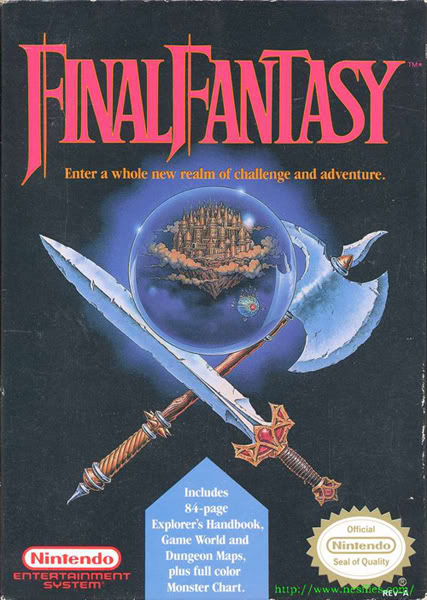
FFEditor's note: With Final Fantasy 13 out, I thought now would be a good time to revisit Brian's 12 Worlds of Final Fantasy. He kicks off with the game that launched one of the most important and beloved franchises in gaming: the original Final Fantasy. -Jason


Franchises and sequels have been a part of gaming since its very inception. When gamers grow attached to a particular title and put their money behind it, developers often feel the need to create a sequel. We've seen this occur with Pac-Man, Mario, Pokémon, and even more recent games such as Halo.

Despite each of these franchises resonating with millions of gamers, none have spawned as many titles as a certain fantasy franchise. Whether or not that's a good thing is a matter of opinion, but regardless of your take on the series, Final Fantasy has clearly won the hearts of millions of gamers during its 22-year existence.

With 13 core titles in the Final Fantasy series (with today's U.S. debut of Final Fantasy 13), Square Enix has built a juggernaut. What's even more impressive than its longevity, however, is that each title in the series is significantly different from its predecessor. Many RPG franchises are similar (at least from a gameplay standpoint) with each installment, but Final Fantasy is one of the rare exceptions.

Ever since the transition from Final Fantasy to Final Fantasy 2, Square Enix hasn't been afraid to drastically alter the series' gameplay and potentially alienate their fans. For many players, this is part of the charm of the franchise, and they return to each title expecting a wacky, albeit deep, battle system.

Differences in each installment may satisfy certain hardcore gamers' fantasies, but players also return to Final Fantasy because of familiar elements that carry over to each installment. With the name Final Fantasy, players expect to see Cid, airships, and Chocobos. If players didn't enjoy watching Zell eat hot dogs in Final Fantasy 8 or staring at a bare-chested Vaan in Final Fantasy 12, they just might find enough traditional elements to make a particular entry of the series bearable.

If you haven't heard of Final Fantasy by now, your soul will forever remain in purgatory. But those of you who're familiar with this legendary RPG series might like to know how Brian Shirk's "The 12 Worlds of Final Fantasy" will go down. Basically, the only thing you'll need to know is that 12 installments of Final Fantasy history are headed your way, so all your favorite (and detested) titles in the franchise will be equally represented. So if you're ready for this wild Chocobo ride, drop everything else you're doing and delve into the twelve worlds of Final Fantasy. This piece contains numerous spoilers.

Read more >>

History, RPGs, and the Struggle for Mainstream Appeal

Default_picture

Editor's note: Brian argues that there is a strong connection between the public's disinterest in academic subjects -- most notably history -- and the general consensus that RPGs are a niche genre: If people don't care about their own origins, why would they care about an invented history? -James


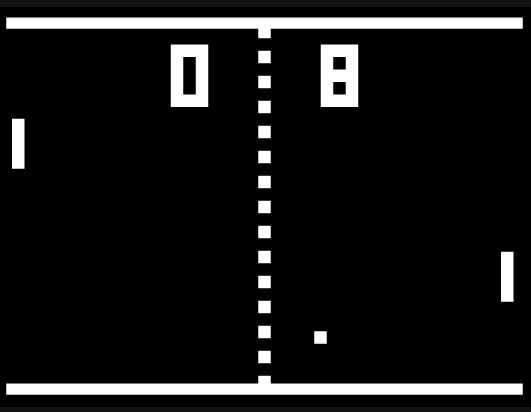
PongProgrammers originally designed video games as complex diversions intended for geeks, but the release of the infamous virtual paddle-battle known as Pong altered their future. With a simple Magnavox Odyssey Tennis clone, Atari shifted video games' appeal from hackers to bar patrons and soccer moms worldwide. Ever since the '70s, the indusry has seen games that have appealed to hardcore gamers or casual gamers exclusively, and sometimes titles have even appealed to both market segments.

Hundreds of games belong in each bracket, but one particular genre rarely leaves its hardcore confines. The role-playing game has typically appealed to hardcore gamers due to their tolerance for complex statistics and immersive worlds. But I've got another reason RPGs rarely reach the mainstream -- they often draw from academic subjects like history that people typically find boring.

Despite living in a complex world full of incomplete records and archaeological wonders, few people care to learn about it. Most of the Earth's nearly seven billion people see history as an amalgamation of dates and names, when really, it's about learning from our predecessors so we can improve the future.

Read more >>