Separator
Managing player expectations
Default_picture
Sunday, January 30, 2011
EDITOR'S NOTEfrom Omar Yusuf

These days, before buying a new game, players will usually ask, "How long is it?" I tend to sympathize with the curiosity; after all, it's pretty comforting to know what lies ahead of you. But can the awareness of the game's direction and length ruin the charm of exploration? Rob makes a really interesting argument.

I race down neon-lit highways, toward the edge of this dystopian metropolis. Thoughts of the chaos left in my wake haunt me. I know that sooner or later, I will have to face the source of my violence, and my escape only makes that point clearer.

A screech of brakes announces my arrival at the end of the highway. What lies beyond, I cannot tell. With a touch of discomfort, I leave the familiar metropolitan landscape behind and step into the unknown.

Suddenly, I discover that the city I've spent the past eight hours exploring is nothing but a single dot on a vast landscape.
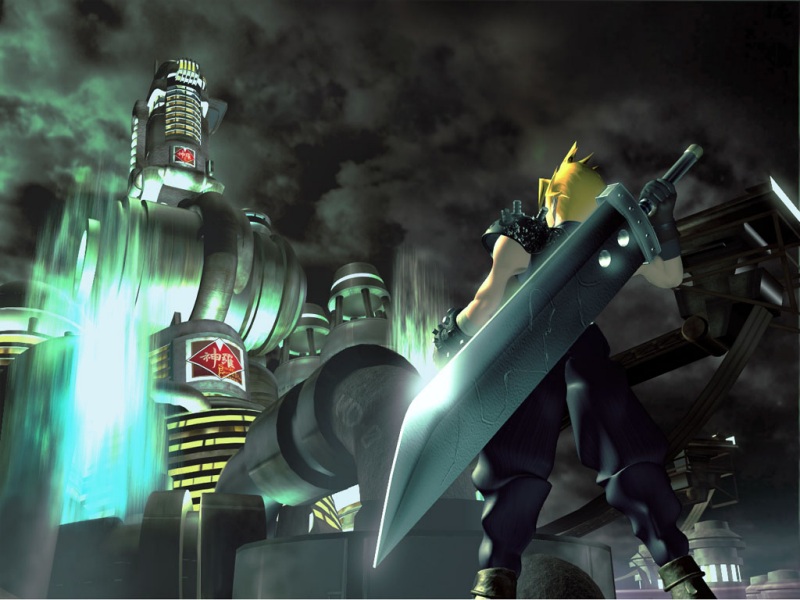
Final Fantasy 7

It's one of the defining moments of Final Fantasy 7. The player's realization that, despite all you've been through, you're only just getting started turns the player's expectations upside down.

Managing player expectations is a critical part of modern game development. If game makers set expectations correctly -- a task requiring close cooperation between designers and marketing teams -- gamers are far more likely to come away satisfied with regard to game length and mechanics.


We need look no further than Brütal Legend to see a perfect example of expectations gone wrong. Before its launch, all the media released (trailers, demos, interviews, etc.) painted Brütal Legend as a straightforward, third-person action-adventure with a neat sense of comic timing and an epic soundtrack. Double Fine sold the idea to its audience in this form, only to bait-and-switch at the last minute, with the revelation that the game's second half was a slightly clumsy attempt at real-time strategy.

Even ignoring the mechanical flaws, the backlash in the gaming press was immediate. Critics greeted Brütal Legend with ho-hum reviews and argued that it was not the same game originally indicated by press materials.

So where should the line be drawn? At what point should a developer say "We should reveal this element of the game, but not that one"? A reasonable, controlled level of hype is great, but is it worth ruining the surprise of new mechanics and game features? Is it worth jeopardizing a player's moment of revelation by splashing it across previews, videos, and tutorials before the player has even bought the game?

Mass Effect 2 raised this issue: After approximately two hours of play, BioWare lays out the structure of the 20-hour title before you. You're told quite clearly that you'll be undertaking a series of missions to recruit a specific number of team members, followed by further missions to secure their loyalty, and finally a suicide mission to resolve the primary conflict of the storyline. Almost every Bioware RPG of the past decade has followed a similar structure: gather a set number of plot tokens (allegiances of kings, starforge maps, etc.) before moving on to a climactic battle.

This transparency is a panacea for managing player expectations. At any point in proceedings, the player knows approximately how far they are through the game, thanks to these unmistakable mile markers of progress. Yet at the same time, it obliterates the potential of the element of surprise in terms of structure. In Mass Effect 2, Assassin's Creed, and other titles which benefit from this transparency, the developer is incapable of suddenly revealing new content or areas to explore. If I've already completed 11 of 12 Animus sequences, it would stretch credulity to make that last sequence longer than all the others combined.

Only one type of title calls for forewarning its length: a short one. Because players automatically expect eight to 10 hours from their first-person shooters, a five-hour title may benefit from a transparent structure, thereby adjusting the player's expectations. For longer games like those discussed above, the plot-token structure achieves little beyond emphasising the game-like nature of these particular mechanics.

I'd much rather enjoy discovering a game's limits at my leisure, and maybe, on occasion, I'll be surprised.


Originally posted at Generation Minus One, the webcomic of last-gen gaming.

 
2
BITMOB'S SPONSOR
Adsense-placeholder
Comments (7)
Me_and_luke
January 29, 2011


I certainly won't argue against a good surprise.  I had no idea what to expect going in to games like Metroid Prime and BioShock, and both ended up being one of my favorite games of all time.  But when it comes to the pre-release beast, at least as far as gameplay is concerned, I believe you either need to take the Nintendo "keep everyone in the dark" approach, or the "give it all up front" approach. 


Brutal Legend tried to strike a a very dangerous middle ground, with a boisterous preview cycle and  marketing campaign, and a meaty demo.   We all had clear expectations at that point.  Yet something as base as the game's genre remained abstruse all the way up to release.  That's simply unacceptable.


Dscn0568_-_copy
January 29, 2011


It's interesting how Capcom fighting games handle pre-release info. In those games Capcom reveals everything about the game before launch. There's no surprise at all, but at least you know what you're getting into.


Default_picture
January 29, 2011


Bryan: I couldn't agree more; Metroid Prime did a great job of making you feel like you were exploring long-forgotten ruins and so on, whereas Metroid Prime 3 quickly descends into "chase down and kill these three guys, then ending". It speaks volumes that I'm barely half-way through, and I'm not sure if I care any more.


I appear to be one of the few who actually enjoyed Brutal Legend's genre-bending, but even so, the marketing was way out of line. I can't even see what they hoped to achieve; metalheads would buy it no matter what they showed, as would Schafer's fanbase. Were there really enough people drawn by the promise of a fairly average character action game with above-average scripting and acting to take that risk?


Chris: Good point. I suppose the trick with Capcom's fighting games is that they're so heavily competitive and mechanics-based. The joy comes from mastering the intricacies of the system, therefore instead of the surprise while playing, they can capitalise on the anticipation building hype beforehand.


In the internet age, particularly, the moment a game like that hits shelves there'd be full disclosure on a thousand forums, so it's probably worth Capcom's while to release the information ahead of time.


Me
January 30, 2011


The biggest offender of this was Metal Gear Solid 2: Sons of Liberty. If you were following that game like I was, you'll know that Raiden wasn't shown in the pre-release trailers. None of them.


They didn't even show the Big Shell until the launch trailer, two weeks before release. Of course, that was the plan, but a lot of players felt that KCEJ mis-sold them the game. They thought they were playing Solid Snake on a gritty tanker for the whole hog. Instead, they got a blonde-haired, whiney "woman-a-like" doing cartwheels around a clean offshore platform.


Personally I loved the surprise, but I know that a lot of gamers hated it.


Default_picture
January 30, 2011
I didn't get round to playing MGS2 until well after the furore had died down, the secret having become common knowledge across the internets, but I can imagine how irritating that must have been (even though Raiden played functionally identically to Snake). From what I remember, the tanker was short enough that it could have been included purely to give the impression that Snake was to be the protagonist throughout; a risky strategy, which perhaps would've worked better if they'd made Raiden just a little less whiny.

Even Kojima and co seem to have realised how unlikeable Raiden was at the time, since both MGS4 and Rising attempt to portray him less as the controversial MGS2 character and more as a near-superhuman cybernetic action hero.
Me_and_luke
January 30, 2011


Yeah, I suppose you make a decent point that many people were already buying or not buying Brutal Legend for their own specific reasons (me being a Tim Schafer and Jack Black fan).  Yet, I know I would have enjoyed the game far more if it were a more standard God of War-like action game (a "genre" that has become increasingly popular over the last five years and developed a massive fanbase).  And seeing how the game was advertised as such, I'd have to guess a fair amount of people were burned in that regard.


Me_another_time2
January 31, 2011


Upon reading this, I immediately thought of Portal. The whole way through the game, you're told that you've got 19 test chambers to finish. Then you realize there's a lot more to it than that.


You must log in to post a comment. Please register or Connect with Facebook if you do not have an account yet.