Japanese retail giant HMV recently released some details on Nintendo's next casual narcotic, Wii Party, explaining a few of the "Living Party" mini-games. They seem to make good on Iwata's earlier claim that Wii Party would feature "unique gameplay only available with the Wii Remote." The three games mentioned (unofficially) are as follows:
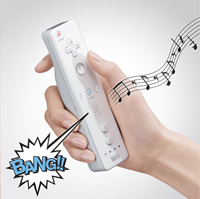
- Wanwan Karuto - You see an animal on-screen, and you have to match it with the animal noise coming out of someone's Wii Remote speaker.
- Hide and Seek - You hide the remote somewhere in your house. All players then must try and find it, listening for sounds it emits through the speaker.
- Sensitive Bomb - In a variation on Hot Potato, players pass the Wii Remote around with a steady hand; if you jiggle it too much, the Remote "explodes" and you lose.
Whether or not those who played through Galaxy 2 and got all 240 stars will buy and play this game is a moot point. The casual/hardcore discussion is a murky pond full of bacteria and leeches: no one wins by wading into that one. But what I find interesting as I find out more details of Wii Party is this: Almost fours into the console's lifespan, very few developers have explored its full potential for the revolutionary play mechanics Nintendo and its codename-writers promised so long ago.
Ask a developer why, and they might respond with familiar allegations: The remote just doesn't work. And sure, that mighty forehand winner I tried to thwack the first time I powered up Wii Sports became, more often than I'd like, a lazy lob. But inventive game mechanics do not need to hinge on precise movement alone. When I first heard a speaker would be included in the Remote itself, I thought it was brilliant: the kind of simple, elegant choice that seems obvious after the fact. But outside of a few survival horror games and WarioWare, few games have tried to enhance their game's experience through a creative use of sonic cues.
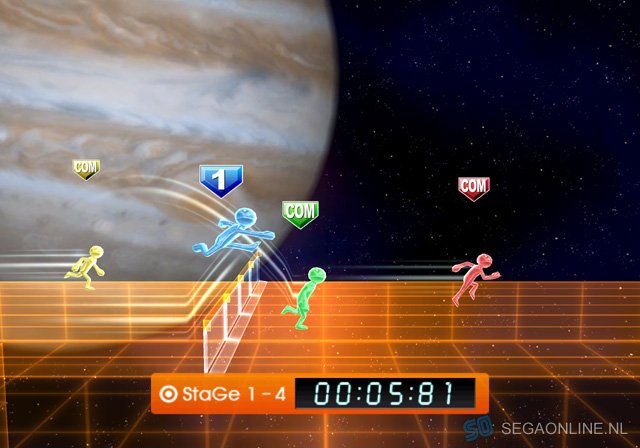
Even before MotionPlus came and remedied some of the Remote's inherent problems, there were and still are many ideas yet to take full advantage of its motion-sensitive capabilities. Not all games need to stick a sword in your hand to use a motion controller. Prope's "Let's Tap" was a unique and charming attempt to expand our notion of how to control a game. By placing the Remote upside-down on a table, the gamer could tap the surface to make a stick figure run in a simple race. Tap more quickly, run more quickly. Even though the same idea has been used in countless Track 'n Field games previously, (and even in Nintendo's own PowerPad games generations ago), the input device has always been buttons (or your own feet). Tapping your fingers to run across the screen may not cause you to give up buttons forever, but the newness of the mechanic undoubtedly put a smile on many a gamers' faces. Where are the other bold developers willing to put aside their fishing sims and sword-fighters and give us something truly new?
The industry is full of me-too clones and unshakeable genre conventions. Often the big boys need to show the way to a greener and more inventive pasture. Nintendo and Namco did it with the DS, showcasing ways to use the new touch-screen with games such as Nintendogs and Pac-Pix. The Big N has tried to again with the Wii, but efforts at non-traditional gaming (Wii Music, anyone?) have failed at both the critical and commercial level. In the age of the App Store, it's often the little guys who grasp a certain technology's potential and showcase it for the rest of us. On Nintendo's downloadable platform, the best WiiWare games have been created by those outside of Kyoto, such as LostWinds or the Bit.Trip series. Because of this expanded developer base, I'm surprised the Wii's unique controls haven't lead to more outside-of-the-box thinking. Perhaps the impending release of Natal and Move will spur an increased urgency within companies to invest time and money into seeking out productive (and whimsical) uses for motion control.
After decades of joysticks and buttons, the era of motion control has not been the sea change in gaming that many had expected. And many more are thankful for this. But I submit there is room for both the traditional dual-analog shooter, and the craziness of a Hide-and-Seek game with your controller. Let's hope that with Wii Party, Nintendo finally showcases all those great ideas their developers have been holding onto since the Revolution became a reality. With Microsoft and Sony encroaching in their waters, this is no time to coast.

